By INGOAMPT AI News · Published November 18, 2026 at 10:09 a.m. Vienna time
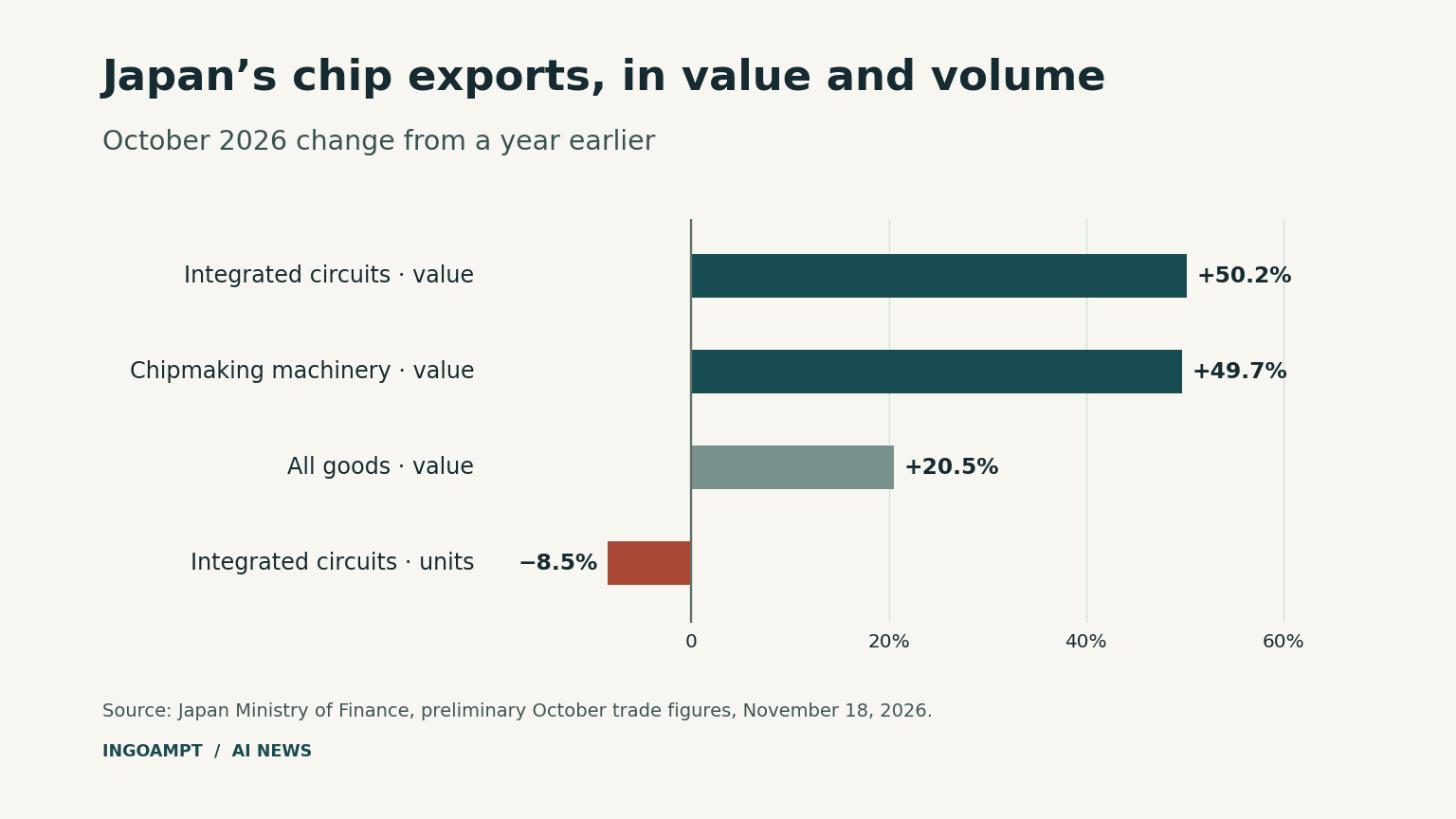
Japan exported ¥544.2 billion worth of semiconductor manufacturing machinery and related goods in October, up 49.7% from a year earlier. The Ministry of Finance released the provisional figures on November 18. The value of all Japanese exports grew 20.5% over the same period. Chipmaking equipment was growing more than twice as fast as the country’s exports overall.
The figures capture one part of the AI buildout that a model launch can’t show. Before a chip can run a model, a manufacturer needs machines to produce it. Japan’s customs data track those machines as they cross a border. They also show why a bigger bill for chips can coexist with fewer chips shipped.
Chip exports rose even as fewer integrated circuits shipped
Take the integrated circuits line in the ministry’s table. Japan shipped 6.81 billion units in October, down 8.5% from a year earlier. Their combined export value nevertheless climbed 50.2%, to ¥708.2 billion. A shift toward more expensive products, a change in prices, or both can yield that pattern. The customs table gives no breakdown that would distinguish those explanations.
| Export category | October value | Annual change in value |
|---|---|---|
| Chipmaking machinery and related goods | ¥544.2 billion | +49.7% |
| Integrated circuits | ¥708.2 billion | +50.2% |
| All exports | ¥11.77 trillion | +20.5% |
How much of that growth came from AI?
The ministry classifies goods by what they are. It doesn’t say whether a particular integrated circuit went into a data center, a car or a consumer device. The same problem applies one step upstream to equipment bought by a chip factory. Reuters reported that analysts linked the strength in chip-related shipments to global AI investment. They also pointed to companies passing higher costs on to customers.
For someone budgeting for AI compute, that distinction matters. These figures show that equipment shipped from Japan fetched more in total and that the value of integrated circuit exports rose sharply. They give no delivery date for new GPU capacity or price per hour for a cloud instance. For a concrete example of how available hardware and software affect the work a developer can run today, see our report on llama.cpp’s Apple GPU update.
Where the figures come from
For the chart and table, INGOAMPT compared the worldwide export rows on page 3 of the Japanese Ministry of Finance’s October trade tables. The ministry’s release calendar places the provisional report on November 18 at 8:50 a.m. in Japan. Export values in the table above are rounded. The growth rates use the ministry’s published figures. For independent reporting on how economists interpreted the release, see Makiko Yamazaki’s report for Reuters.