INGOAMPT AI News · Original developer analysis published Saturday, 7 November 2026 · Vienna (CET/UTC+1). The source’s publication and event dates are distinguished below. Illustrations are original editorial artwork rather than documentary photographs.
Original source date: Friday, November 6, 2026 (US Eastern). TechCrunch reported Google’s takeover of an unfinished Wyoming data-center project from Crusoe late Friday in the US. INGOAMPT published this separate developer analysis Saturday, November 7; it is not a new Saturday US news story.
When the original report was published
TechCrunch published the original source Friday, November 6, 2026, at 5:40 p.m. Pacific, corresponding to 8:40 p.m. US Eastern and 2:40 a.m. Saturday in Vienna. Using the US Eastern newsroom clock, this is Friday news and belongs in the previous-reporting archive. The timing difference does not make it a Saturday US announcement.
What TechCrunch reported
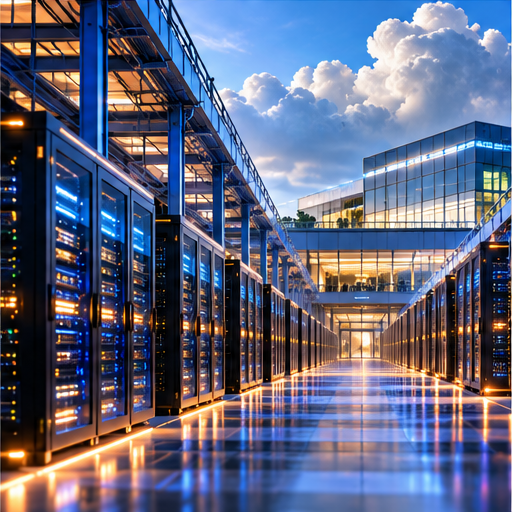
Crusoe confirmed it sold the development of an unfinished Wyoming campus to Google. Google has described plans to invest approximately $17 billion in the project, while terms of the acquisition were not publicly disclosed. The report discusses the complexity of acquiring equipment, securing power and delivering hyperscale facilities on time; these issues can affect infrastructure providers differently from software application developers.
The infrastructure lesson
AI services require dependable compute capacity, energy and networking. A huge announced capital figure isn’t evidence that new GPU capacity is already available or that an AI API will cost less next week. Hardware deployment and developer-facing prices operate on different schedules.
What an indie builder should measure
Audit your service-level dependency on one model and cloud region. Identify the three most frequent failure or latency causes, set practical request ceilings, cache safe repeat results, and keep fallback user-facing behavior useful even when an inference call fails.
A realistic SaaS budget exercise
Run one month’s sampled workloads through your staging environment, measure actual usage and retries, then model costs under a 20% higher inference price and a three-hour API outage. These are hypothetical stress scenarios—not forecasts of what Google or Crusoe will do.
Sources, limitations and further reading
INGOAMPT’s recommendations and test exercises are independent editorial analysis, not claims by the cited publishers. Product demonstrations, company statements and reported financing are attributed rather than treated as independently proven. This article is educational, not investment or legal advice.