INGOAMPT AI News · analysis published Friday 6 November 2026, Vienna (CET). Source release or reporting dates are identified below; all figures remain attributed to their publishers.
Why this matters beyond semiconductor investors
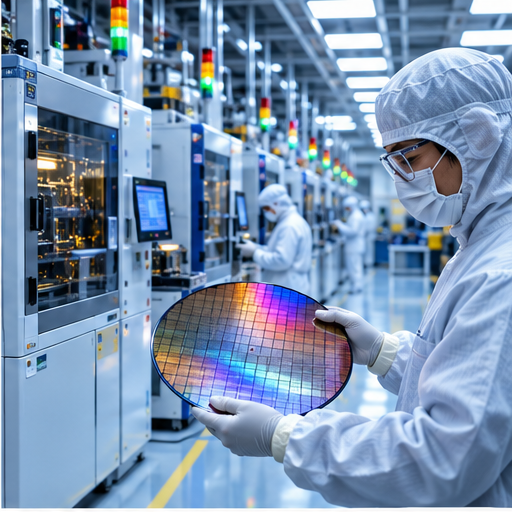
Artificial intelligence systems rely on memory, networking and storage as well as GPUs. New Reuters reporting on Friday 6 November describes Yangtze Memory Technologies’ plans to prioritize Chinese-made manufacturing tools at its proposed fourth Wuhan plant. This is a plan under discussion, not a factory that has already opened.
What Reuters actually found
People familiar with the matter told Reuters that YMTC aims for at least 60% and potentially 70% domestic equipment at its planned factory. The company is targeting advanced NAND flash with more than 300 stacked layers, with products intended in part for data centres and AI. Supplier discussions are preliminary, and formal orders have not been placed. China still depends on foreign suppliers for some demanding lithography and inspection equipment.
Why a solo AI SaaS founder should care
A cloud model looks like a simple API, but behind it are storage systems, trained model weights, data movement and hardware supply chains. A change in memory availability can affect the cost and availability of AI infrastructure over time. It does not mean current application API prices have changed today.
A practical technical exercise
List the data that your AI feature stores during a typical request: input text, vector embeddings, files, model context and output. Work out what is kept in RAM, what goes to persistent storage, and which part creates the largest recurring bill. For an iOS app, test whether local caching can safely reduce repeated API calls without retaining private data unnecessarily.
What remains uncertain
Construction is a proposal, equipment purchases have not been confirmed and economic or export restrictions could alter the timeline. Independent developers should watch actual capacity and cloud pricing rather than make launch decisions from a proposed factory target.
Sources and editorial transparency
INGOAMPT’s developer takeaways are our independent interpretation of publicly linked reporting. We did not conduct interviews, reproduce licensed news photography or independently audit publishers’ business figures. This article offers educational context, not financial or legal advice.