When a Child Hears Music but Not Words: Auditory Neuropathy vs. Pure Word Deafness
Introduction:
Imagine a child who smiles and sways to a favorite melody, yet does not respond when you call their name or speak to them. This puzzling scenario can be heartbreaking for parents and challenging for professionals to understand. How can a child seem to “hear” music but not spoken language? Two rare auditory conditions could explain this phenomenon: Auditory Neuropathy Spectrum Disorder (ANSD) and Pure Word Deafness (also known as Auditory Verbal Agnosia). In this post, we will explore these conditions in depth – from the science of the ear and brain, to the signs parents might notice, through the full diagnostic pathway of tests (explained in plain language), and finally to guidance on advocating for your child’s care. We’ll also include helpful tables, sample letters, and tips for navigating follow-up. Let’s dive in.
Understanding the Difference: Ear vs. Brain in Hearing
To understand these conditions, it helps to know where the hearing process is breaking down in each case. In normal hearing, sound travels through the ear to the cochlea (inner ear), is converted to nerve signals by tiny hair cells, and then travels along the auditory nerve to the brainstem and up to the auditory cortex in the brain. If any link in this chain malfunctions, hearing and understanding can be affected.

- Auditory Neuropathy Spectrum Disorder (ANSD) is a condition where the inner ear detects sound normally, but there is a problem with transmitting the sound signals from the ear to the brain. In other words, the cochlea (particularly the outer hair cells) often functions well, but the auditory nerve’s signals are desynchronized or disrupted on the way to the brain. Think of a blurry or broken telephone connection: the ear “hears” the sound, but the signal arriving at the brain is jumbled. This is a peripheral hearing issue – related to the nerve connection – and not a problem with the higher brain centers that interpret sound.
- Pure Word Deafness (Auditory Verbal Agnosia) is a condition where the ears and auditory nerves are working, but the brain cannot interpret speech sounds. It is a form of central auditory processing disorder – essentially a cortical (brain) problem in understanding spoken language. Individuals with pure word deafness are unable to comprehend spoken words despite having normal hearing for other sounds. Non-speech sounds – like music, dogs barking, or doorbells – are heard and recognized normally. The “hearing” part of the ear works fine; it’s the language decoding part of the brain that’s impaired. This typically results from bilateral damage to the auditory cortex (temporal lobes) or the neural pathways that specifically carry speech information. In children, it can occur after certain brain injuries or conditions (for example, encephalitis or epilepsy in the language areas).
In short: ANSD is a disorder of signal transmission in the ear-to-nerve pathway, whereas pure word deafness is a disorder of making sense of sound in the brain. A child with ANSD might have trouble hearing clearly due to a “noisy” nerve signal, and a child with pure word deafness physically hears sounds but their brain cannot understand speech. This difference in location (ear/nerve vs. brain) explains why both conditions can lead to a child who doesn’t respond to spoken language – but the underlying reasons are very different.
The Science Behind Each Condition
Auditory Neuropathy Spectrum Disorder (ANSD)
What Happens in ANSD: In ANSD, sound enters the ear normally and the cochlea often functions well. In fact, the outer hair cells of the cochlea (which amplify sound and generate otoacoustic emissions) are typically intact. However, the problem lies in the synaptic transmission to the auditory nerve or the firing of the nerve itself. The term “neuropathy” or “dyssynchrony” indicates that the nerve fibers are not firing together in a synchronous way. It’s as if the auditory nerve’s Morse code is coming through with static and timing errors. Because of this, the brainstem and brain receive a distorted or un-timed signal even though the ear “heard” the sound.
Neurological/Cochlear Basis: There are multiple possible sites of lesion in ANSD. Research indicates it could be due to: damage or dysfunction of the inner hair cells (the sensory cells that synapse with the auditory nerve), a problem at the synapse (connection) between inner hair cells and the auditory nerve fibers, or dysfunction of the auditory nerve fibers themselves. In some cases, the issue could extend into the brainstem pathways, but generally the term ANSD is used when the breakdown is at or before the auditory nerve level. Importantly, outer hair cell function is preserved – which is why tests of cochlear function (like otoacoustic emissions) often come out normal in ANSD. In summary, the cochlea’s amplifier is working, but the “wiring” to the brain has a glitch.
Known Causes and Risk Factors: ANSD was only recognized in the 1990s, and it can have a variety of causes. Some known associations include: prematurity, lack of oxygen at birth, severe jaundice (hyperbilirubinemia) requiring transfusion, ototoxic drug exposure, certain genetic mutations, or neurological syndromes affecting nerves (like Charcot-Marie-Tooth disease, a neuropathy). Sometimes it co-occurs with other neurodevelopmental issues. In many infants, ANSD is discovered through newborn hearing screening programs when an ABR test is failed but otoacoustic emissions are passed. (If a newborn hearing screen only uses OAE and not ABR, ANSD can be missed, since the baby’s OAE could be normal.)
How ANSD Affects Hearing: The degree to which ANSD impacts hearing varies widely – it’s a “spectrum.” Some children with ANSD have near-normal hearing sensitivity (they can detect soft sounds in a quiet room), while others have significant hearing loss. A common thread, however, is poor speech perception out of proportion to pure-tone hearing ability. In other words, even if a child can hear some sounds, they struggle to understand spoken words clearly, especially in background noise. This is because understanding speech requires precise timing cues and synchronization, which is exactly where ANSD causes trouble. Many parents of children with ANSD describe that their child’s hearing “comes and goes” or fluctuates, and that the child might respond inconsistently – one day seeming to hear and the next day not.
Why Music May Get Through: Interestingly, children with ANSD may still respond to certain sounds like music or rhythm. Music often has strong low-frequency components and steady rhythmic patterns that might be easier for a dys-synchronous auditory system to detect (or the child might be feeling the vibrations). Speech, on the other hand, is very rapid and complex, and ANSD scrambles those fine details. So a child with ANSD might dance to a beat or turn to a loud musical toy, yet miss what a person is saying. They “hear” sound is present, but deciphering the words is like trying to read a smudged text. Parents might notice the child is alerted by loud sounds or enjoys lullabies, but doesn’t learn words or respond to their name being called in a typical way.
Pure Word Deafness (Auditory Verbal Agnosia)
What Happens in Pure Word Deafness: In pure word deafness, the ears, cochlea, and auditory nerve are intact – sound is getting to the brain – but once it reaches the auditory cortex, the brain cannot interpret speech sounds. It’s a specific type of auditory agnosia which means a person cannot recognize or give meaning to certain sounds. In this case, the sounds that lack meaning are spoken words. The child hears you talking (they may even turn toward your voice because they detect the sound), but your words might as well be a foreign language or just meaningless noise to them. Remarkably, non-speech sounds are understood normally – the child might laugh at the sound of a funny horn, recognize the tune of “Happy Birthday,” or run to the door when they hear the doorbell, yet spoken language is “garbled” in their brain.
Neurological Basis: Pure word deafness is a cortical auditory disorder. It usually results from bilateral damage to the superior temporal lobes, where the primary auditory cortex and auditory association areas (including Wernicke’s area, crucial for speech comprehension) reside. Essentially, the brain’s language processor is offline. Causes in adults often include strokes or brain injury to both sides of the auditory cortex. In children, this condition is extremely rare but has been documented after herpes encephalitis (a severe brain infection) or in association with Landau–Kleffner syndrome (a pediatric epilepsy syndrome that causes loss of language comprehension). In such cases, an otherwise normal child may start to lose language abilities, seemingly becoming deaf to speech while still reacting to other sounds. MRI scans often show lesions or damage in the auditory regions of the brain. In one reported case, a toddler suffered encephalitis (brain inflammation) at 16 months old; afterward, her parents noticed she never developed speech and did not react to spoken words, yet later testing showed her peripheral hearing was nearly normal. The MRI in that case confirmed lesions in both temporal lobes (auditory cortices).
How Pure Word Deafness Affects Hearing: Importantly, pure word deafness is not a hearing loss in the usual sense – if you measure the child’s ability to detect tones or environmental sounds, it will typically be normal or near-normal. This is why these children can pass a standard hearing test or show normal responses on many audiology measures. The hallmark, however, is a profound inability to understand spoken language. A young child with auditory verbal agnosia might not develop spoken words or may babble and then stop using language because they cannot hear their caregivers’ speech properly to mimic it. An older child or adult might say people are “mumbling” or that voices sound unclear, even though they can hear that someone is talking. Often, individuals with pure word deafness can still speak (produce speech) themselves, but what they say might be imprecise or they may rely heavily on lip-reading and context. In children who acquired the condition (for instance, due to Landau–Kleffner syndrome around ages 3–7), you might see a regression in speech – they may become increasingly quiet or start making speech errors because they no longer hear words correctly. They might respond much better if you use visual cues, like sign language or writing.
Why Music Comes Through: Because the auditory cortex for music and the processing of non-speech sounds often involves different neural networks (including more right-hemisphere regions for music), those pathways may remain intact. So a child with pure word deafness can enjoy music, recognize songs, and respond to intonation or emotional tones in sound, yet still not decipher spoken words. Parents sometimes think the child has “selective hearing” – since the child might even mimic musical sounds or respond to animal noises but acts “deaf” when spoken to. In reality, the child’s hearing is normal for sounds, but the brain’s language center isn’t connecting meaning to the words.
Signs and Symptoms to Look For
Understanding the real-life signs of these conditions can help parents and professionals differentiate between a peripheral hearing issue like ANSD and a central one like auditory agnosia. Here are some symptoms and behavioral clues:
- Inconsistent Response to Sounds: A child with ANSD may behave inconsistently. They might startle to a loud bang one day and the next day not respond to the same bang at all. Parents often describe “unreliable” hearing – the child’s ability to detect sound seems to fluctuate from day to day or hour to hour. This can be very confusing. In pure word deafness, the inconsistency is more specific: the child reliably responds to non-speech sounds (like their favorite toy’s musical jingle, dogs barking, vacuum cleaner noise, clapping) but consistently fails to respond to speech (their name, simple verbal requests, or even loud shouts unless there is some non-verbal sound quality to it).
- Difficulty Understanding Speech: Both conditions cause difficulty with speech, but in different ways. A child with ANSD might hear that someone is talking but “can’t make out the words,” especially in background noise. They may do better in quiet environments and when looking at the speaker’s face (using visual cues). In contrast, a child with pure word deafness cannot comprehend spoken words at all, even in perfect silence, because the words do not register as meaningful. They might respond to the voice’s presence (“I hear something”) but not to the content. For example, if you say “cookie?” they might smile just because your tone was happy or because they see you holding a cookie, but not because they truly understood the word.
- Speech and Language Development: In ANSD, because sound transmission is inconsistent, language development may be delayed or impaired. Some ANSD children develop some speech (especially if their hearing thresholds are only mildly affected or if they receive early intervention), but their speech might lack clarity or they might have trouble articulating sounds they don’t hear well. They often need a lot of visual or tactile cues in speech therapy. In pure word deafness, if it occurs prelingually (before the child learned to talk), the child may not develop spoken language at all, or only a few words, because they never properly perceive speech to imitate it. If it occurs after they have started learning language (as in Landau–Kleffner syndrome, which can start around age 3-7), you might see a loss of language skills (regression): a child who used to say words may stop speaking or start making nonsensical sounds, and they no longer seem to understand what is said to them. This can sometimes be misdiagnosed as autism or deafness. One key difference: children with pure word deafness often maintain social interest – they may still desire interaction and use gestures or other ways to communicate, whereas autistic children might socially withdraw (though every child is different).
- Hearing in Noise: Children with ANSD typically have a very hard time in noisy environments. For example, in a loud classroom or busy playground, they might completely shut down or not respond because the dys-synchronized nerve signal makes it especially hard to pick out speech from noise. Children with pure word deafness will not understand speech even in quiet, but they might still be bothered by noise or respond to the general sound environment. Interestingly, a child with pure word deafness might appear more responsive in noise if there are lots of non-speech cues (they might join other kids in reacting to a loud bang or laugh along if others laugh at a funny sound) – but they still won’t follow verbal instructions in noise or quiet.
- Use of Visual Cues: Both groups may become very visually tuned. A child with ANSD might watch your face intently to help interpret what you’re saying (essentially lip-reading to fill in what they miss). A child with pure word deafness will also rely on lip-reading or sign language to communicate, since auditory speech isn’t making sense – in reported cases, affected children often learn to lip-read extremely well to compensate. If you notice your child seems to understand you much better when they can see you talking versus when you call from another room, this could be a sign of an auditory processing issue.
- Other Neurological Signs: Because ANSD can be associated with global neuropathy or other nerve issues, some children with ANSD have balance problems or delayed motor milestones, or other nerve-related issues (since the same underlying cause – like a genetic neuropathy – might affect multiple nerves). On the other hand, pure word deafness often comes from a brain injury or epilepsy; there might be signs like seizures (in Landau–Kleffner, seizures often occur during sleep), or after an encephalitis, the child might have had a period of illness. If the cause was a one-time injury (like an infection), the child might otherwise recover and be physically normal aside from the auditory agnosia. It’s worth noting: cognitive abilities in pure word deafness are usually unaffected – the child is not intellectually disabled; they simply can’t process spoken language. They may excel at visual tasks or nonverbal communication.
Emotional and Behavioral Clues: Both conditions can be very frustrating for the child. A young child may become fussy or withdrawn because they aren’t understanding communication like other kids do. They might appear to “ignore” people speaking to them, which can be mistaken for behavioral problems. Some may develop anxiety or clinginess, or the opposite – they might play alone because interaction is hard. Understanding that there is an underlying auditory issue – not willful stubbornness – is crucial for parents and teachers.
If you suspect one of these conditions (for example, your child loves musical toys but never responds to their name), it’s important to pursue a thorough hearing and neurological evaluation. Next, we’ll discuss exactly what tests can differentiate these conditions and how to get a proper diagnosis.
The Diagnostic Pathway: Tests and What They Reveal
Diagnosing why a child hears some things but not others requires a comprehensive battery of tests. Audiologists and other specialists will use a combination of objective tests (which don’t require the child’s active participation) and behavioral tests (which do require cooperation) to pinpoint the issue. Below, we explain each major test, what it measures, how it’s done, and what the results might show for ANSD vs. pure word deafness. We’ll also note which tests can be done with the child asleep or sedated (critical for toddlers or children who can’t sit still). Don’t worry – we’ll break down the acronyms:
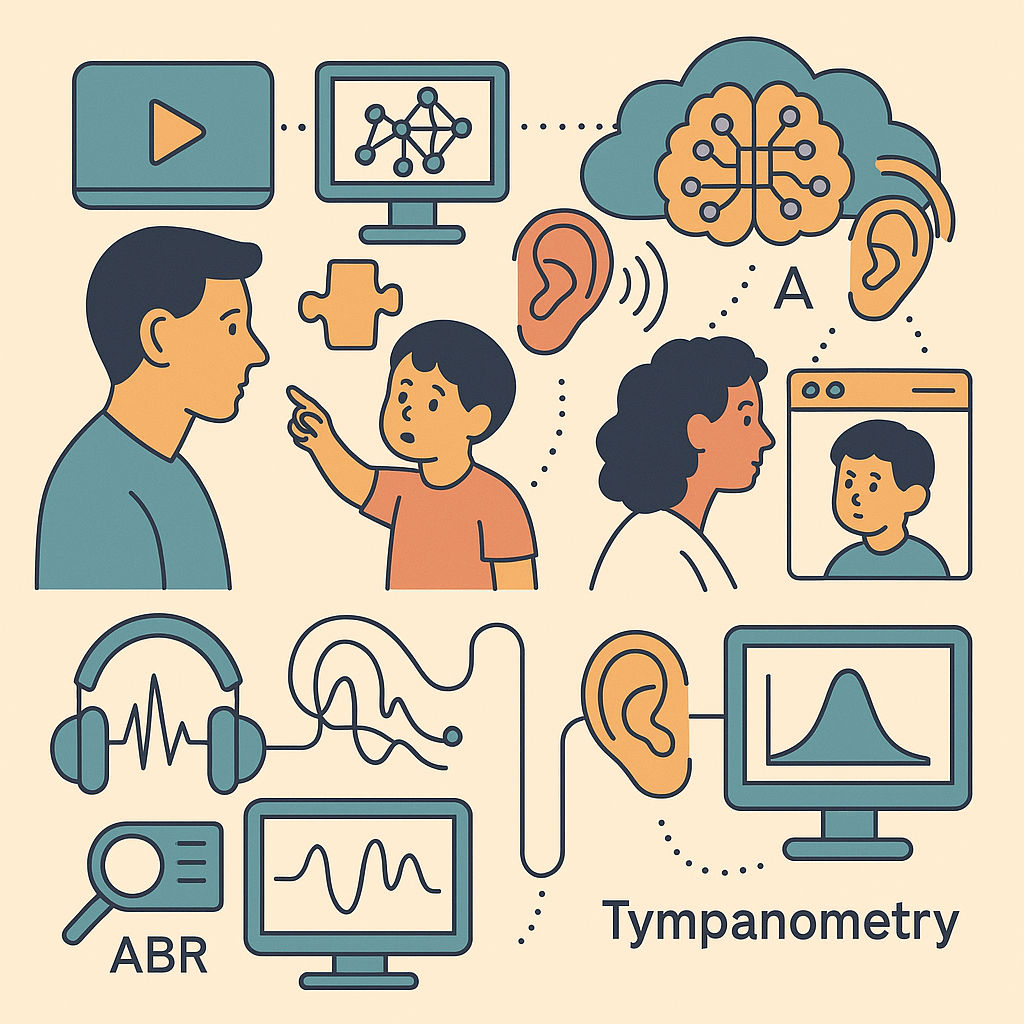
- Tympanometry & Acoustic Reflexes: These are basic middle-ear tests. Tympanometry checks the movement of the eardrum and middle ear bones by changing air pressure in the ear canal and seeing how sound is reflected. It tells if there is fluid or other middle-ear issues. It’s quick, objective, and painless – a soft probe goes in the ear for a few seconds. A normal result (called a Type A tympanogram) indicates the middle ear is healthy (no fluid, normal eardrum mobility). Acoustic reflex testing involves playing a loud tone to see if a tiny muscle in the middle ear reflexively contracts (this happens in normal hearing as a protective reflex). This reflex arc involves the auditory nerve and brainstem. In ANSD, acoustic reflexes are often absent or elevated because the nerve firing is not consistent enough to trigger the reflex. In pure word deafness, acoustic reflexes are typically present (since the ear and lower brainstem are intact). Tympanometry is objective and can be done on any age – no sedation needed (it’s very fast, though a wiggly toddler might need gentle holding). An audiologist or trained technician performs these tests.
- Otoacoustic Emissions (OAE): This test checks cochlear (outer hair cell) function. A small earprobe emits soft sounds (clicks or tones) and a microphone in the probe records the faint “echo” produced by the outer hair cells in a normally functioning cochlea. It’s objective, painless, and takes a minute or two per ear. The child just needs to be reasonably still and quiet. What it tells us: If OAEs are present, it means the outer hair cells in the cochlea are working – generally a sign of normal or near-normal cochlear function (at least for mild-or-better hearing levels). In ANSD, OAEs are often normal/present, because the cochlea is doing its job even though the nerve isn’t transmitting well. (Sometimes OAEs can disappear over time in ANSD, but initially they’re present.) In pure word deafness, OAEs would also be normal, since the hearing organ itself has no damage. If a child’s OAEs are absent, it usually indicates a more typical sensorineural hearing loss (cochlear damage) – which would not fit the profile of hearing music but not speech. Thus, normal OAEs combined with hearing difficulty immediately raises suspicion of ANSD or a central issue.
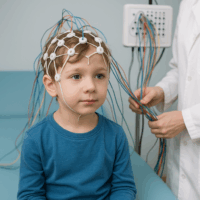
- Auditory Brainstem Response (ABR): ABR is a powerful objective test that examines the neural response to sound from the auditory nerve through the brainstem. The audiologist places tiny electrodes (stickers) on the child’s head (forehead, behind the ears) to record electrical activity. Through earphones, a series of clicks or tone bursts are played. The computer averages the brain’s responses to these sounds and displays a waveform with peaks labeled Waves I through V, which correspond to specific points along the auditory pathway (from nerve to brainstem). In a normally hearing person, you can identify these waves occurring within the first 10 milliseconds after a sound: Wave I (auditory nerve), II (cochlear nucleus), III (superior olivary complex), IV (lateral lemniscus), and Wave V (inferior colliculus in the midbrain). Wave V is most robust and is used to estimate hearing threshold (the softest sound that still elicits a Wave V).
- How ABR is done: For infants under ~6 months, ABR can often be done in natural sleep (after feeding, the baby is coaxed to nap with electrodes on). For older babies and toddlers, sedation is usually needed to keep the child still and asleep, because any movement can disrupt the test. Sedated ABRs are typically done in a hospital with an anesthesiologist or sedation nurse monitoring, while the audiologist runs the test. It’s a safe and painless test; the child just “sleeps” through it. The entire ABR test can take 30–90 minutes depending on if both ears and multiple sound levels/frequencies are tested.
- What ABR reveals: ABR can tell us if the auditory nerve and brainstem are responding to sound and give an estimate of hearing sensitivity. In ANSD, ABR results are characteristically absent or grossly abnormaleven when hearing is otherwise present. The clicks might produce no clear waveform (no identifiable Waves I–V) or highly disorganized, delayed waves. This reflects the dys-synchronous firing – the nerve fibers aren’t firing together enough to produce the normal peaks. Cochlear microphonic (CM): Often during an ABR test for suspected ANSD, the audiologist will check for a cochlear microphonic, which is an electrical response from the cochlea itself. The CM mimics the sound (it will invert its phase if the stimulus polarity is flipped). In ANSD, a CM may be present (indicating the hair cells are responding) even though the later ABR waves are absent – this pattern helps confirm ANSD. In pure word deafness, by contrast, the ABR is typically normal – all waves present at normal latencies. This is because the auditory nerve and brainstem are working fine; the issue is further up in the cortex, which ABR does not test. A normal ABR in a child who does not respond to speech is a red flag against peripheral hearing loss and points toward a central auditory problem. In fact, documenting a normal ABR (or near-normal, perhaps threshold within 20-30 dB) alongside the child’s apparent “deafness” to language is critical to diagnosing auditory verbal agnosia.
- Auditory Steady-State Response (ASSR): This is another objective electrophysiological test, somewhat like a cousin of ABR. ASSR uses steady, repetitive tones (often amplitude- or frequency-modulated tones) at various frequencies, presented simultaneously or sequentially. The EEG (brainwave) recording is analyzed for brain responses that match the modulation frequency of the tones. In simple terms, an ASSR test can estimate the child’s hearing thresholds across different pitches (frequencies) – much like an automated audiogram.Why use ASSR? ASSR is especially useful for measuring frequency-specific hearing sensitivity and can even test severe to profound losses (it can go up to louder levels than ABR in some systems). It also can test both ears and multiple frequencies at once, making it time-efficient. Like ABR, it requires the child to be sleeping or still (often done in sedation alongside ABR).ASSR in ANSD vs PWD: One important note – ASSR is great for estimating hearing thresholds, but it does notdiagnose ANSD by itself. In fact, an ASSR might show that a child with ANSD has near-normal hearing thresholds, because it can detect some response to tones even if the firing is dys-synchronous. Studies have shown that in many cases of ANSD, ASSR responses can still be obtained where ABR is absent. For example, one study found ABR was absent in 11 of 13 ANSD patients, but ASSR was absent in only 3 of them – meaning most ANSD patients did yield ASSR responses, giving an estimate of their hearing levels. So, ASSR can be used to quantify hearing sensitivity in ANSD, but the presence of an ASSR doesn’t mean hearing is “normal” in functional terms. It simply means the cochlea responds to sound enough to generate an EEG-detectable rhythm. In practice, audiologists will use ASSR alongside ABR for a child with ANSD to figure out roughly what tones they can hear at what volumes. In pure word deafness, ASSR would be entirely normal (since peripheral hearing is normal). It would show normal thresholds at all frequencies, which again underscores that the child’s ears detect sound normally.Specialist & sedation: ASSR is typically done by an audiologist using the same electrode setup as an ABR. It can be done in the same session as a sedated ABR (many modern devices do both). It requires the child to be asleep or very still (natural sleep in infants or sedation in older kids, similar criteria as ABR).
- Behavioral Audiogram (Pure-Tone Audiometry): This is the standard hearing test where we measure the softest sounds a person can hear at different frequencies (pitches) by observing their behavior or obtaining a response. In infants, this might be done as Visual Reinforcement Audiometry (VRA) – where a sound is played and the baby is conditioned to turn toward it, rewarded by a toy lighting up. In toddlers/preschoolers, Conditioned Play Audiometry is used – the child is taught to perform an action (like drop a block in a bucket) whenever they hear a sound. Older children and adults simply raise a hand or press a button when they hear the beep. This test requires the child’s active participation, so it’s called a behavioral test. It cannot be done under sedation – the child has to be awake and cooperating. For very young or developmentally delayed children, reliable behavioral audiometry might not be possible, which is why we rely on ABR/ASSR in those cases.What it shows: A behavioral audiogram will show if the child has normal hearing sensitivity or a hearing loss (mild, moderate, severe, etc., at each frequency). In ANSD, pure-tone audiometry results can be highly variable. Some ANSD children might appear to have a significant hearing loss on this test (because they can’t consistently hear the tones), others might test near-normal especially in a sound-treated booth on a good day. Often, the behavioral thresholds in ANSD are fluctuating or “better one day, worse another”. Speech perception testing (if the child is old enough to do it) is usually much worse than you’d predict from the audiogram. In pure word deafness, the behavioral audiogram typically comes out normal or near-normal across all frequencies. That’s because the child does actually hear the pure tones (they are simple sounds that don’t require speech processing). However, if the child is very young or can’t understand the task due to their condition, the audiogram might initially look like a hearing loss simply because the child isn’t responding to the tester’s voices or instructions. In the case study we mentioned, the child was initially misdiagnosed as “profoundly deaf” and fit with hearing aids, because she wasn’t responding to speech or test signals. But later, with more careful testing, they found she actually had only a mild hearing loss at most and normal brainstem responses – revealing the true issue was central. So, in practice, if a child won’t respond to sounds in a behavioral test, audiologists turn to the objective tests (ABR/OAE) to confirm if it’s the ear or the brain causing the non-response.
- Cortical Auditory Evoked Potentials (P1, N1, P2): These are ERPs (event-related potentials) from the auditory cortex, recorded with EEG electrodes on the scalp, but at longer time windows than ABR. Where ABR measures in the 0–10 ms range, cortical auditory evoked potentials (CAEPs) occur around 50–300 ms after a sound. The major waves are often labeled P1, N1, P2 (P for positive peak, N for negative trough). In infants and young children, the P1 wave (around 50–150 ms in kids) is the dominant response, related to the immature auditory cortex. In older children and adults, an N1 (~100 ms) and P2 (~180–200 ms) appear, reflecting more mature cortical processing of sound. These responses indicate that sound has reached the auditory cortex and the brain is registering it.Why measure CAEPs? In cases of hearing loss or ANSD, CAEPs can be used to see if sound is reaching the cortex especially when the child is using hearing aids or a cochlear implant. For example, in a deaf child who got a cochlear implant, the presence and normal timing of a P1 response can confirm that the brain is receiving sound and even indicate if the auditory pathways are developing appropriately. In ANSD, despite an abnormal ABR, it is sometimes possible to record cortical responses if the child has some usable hearing or with amplification – meaning the cortex might still get some input and generate a P1/N1 wave. This can help in assessing how well interventions are working. In pure word deafness (auditory cortex lesion), we would expect cortical responses to speech sounds to be abnormal or absent, since that very cortex is compromised. Interestingly, a pure tone might still evoke a basic P1 response if primary auditory cortex is partially functioning, but the waves might be abnormal for speech stimuli or may have different morphology. However, cortical testing in a young child with suspected verbal agnosia is not commonly done clinically (it’s more a research tool) – an MRI and behavioral observation usually confirm the diagnosis. Still, in a research or specialized setting, one might see that a child with auditory verbal agnosia has absent differentiation in cortical responses to speech.Practical aspects: CAEP testing is non-invasive but requires the child to be awake and relatively still (or sometimes in a light natural sleep for infants). Sedation cannot be used because sedatives greatly diminish or eliminate cortical responses (they essentially “put the brain to sleep”). So this test is usually done in older children who can tolerate wearing EEG electrodes and maybe watch a silent video while sounds play. MMN (Mismatch Negativity) and P300 are special types of cortical responses:
- MMN occurs when the brain automatically detects a change in a repetitive sound sequence (for example, “ba ba ba ba ga”). It doesn’t require active attention – the brain of a normal-hearing person generates an MMN wave (~150-250 ms) to the deviant sound. MMN can tell if the brain can discriminate two sounds. In a child with ANSD, an MMN to a clear change (like a big frequency difference) might be present if they can hear the sounds, but an MMN to a subtle speech sound difference might be poor if the neural encoding is fuzzy. In pure word deafness, the MMN for speech sound changes would likely be absent or abnormal (since the brain isn’t recognizing the change as a meaningful one) even though an MMN to a non-speech change (like a change in pitch or musical tone) could be normal.
- P300 is an attention-dependent response (around 300+ ms) that requires the person to be actively listening for a target (e.g., “press the button when you hear the oddball beep”). This is not feasible in very young kids, but in an older child it can measure higher auditory cognition. A child with ANSD might have difficulty reliably performing the task if hearing is inconsistent, whereas a child with pure word deafness would be unable to perform a speech-based P300 task (like detecting an odd word) but might do fine with a non-speech target.
- Other Assessments: Depending on the findings, other tests might come into play:
- Speech Perception Tests: If the child is old enough or can sign/point to pictures, tests of understanding speech (words or sentences) with and without amplification can be done. In ANSD, speech perception scores are usually disproportionately low relative to pure-tone hearing. In pure word deafness, speech perception is essentially nonexistent via hearing (0% understanding), though the child might understand speech through lip-reading or not at all.
- Auditory Processing Tests: For older children (typically 7+), central auditory processing disorder (CAPD) tests check things like understanding in noise, or distinguishing similar sounds. A child with residual auditory verbal agnosia might show severe deficits on these, but these tests require some language ability so they may not be applicable if the child’s speech comprehension is essentially zero.
- Imaging (MRI): In cases where a central auditory disorder is suspected (like pure word deafness), an MRI of the brain is often ordered. This can reveal damage in the auditory cortex or other neurological abnormalities. In documented cases of auditory verbal agnosia, MRIs have shown lesions in the superior temporal gyrus (the primary auditory area) bilaterally. An MRI is not used to diagnose ANSD (since ANSD is usually diagnosed via audiological tests and often the MRI is normal or shows maybe nerve deficiency in some cases), but if a child has ANSD and other neurological signs, an MRI might be done to look for broader neuropathies or neural damage.
- Genetic Tests: For ANSD, if the cause isn’t obvious (like prematurity or jaundice history), sometimes genetic testing is done to look for specific mutations (for example, OTOF gene mutations can cause a form of ANSD due to a synaptic dysfunction known as auditory neuropathy). This is usually pursued by an ENT (ear, nose, throat doctor) or geneticist.
- EEG: If something like Landau–Kleffner syndrome is in question (because the child lost language skills), an electroencephalogram may be ordered by a neurologist. In Landau–Kleffner, the EEG typically shows epileptic activity in the language areas during sleep, which essentially “scrambles” auditory processing. This is a distinct diagnosis but it causes an auditory verbal agnosia picture.
That covers the array of tests. It’s a lot of information, so below are two summary tables to organize the key points:
Table 1: Summary of Hearing Tests – Type, Method, and Suitability
| Test | Type of Test (Objective vs. Behavioral) | Can be done in sleep/sedation? | What It Measures / Key Info |
|---|---|---|---|
| Tympanometry & Acoustic Reflexes | Objective (physiological) | Yes (no active participation needed; very quick) | Middle ear function (eardrum movement) and reflex pathway integrity. |
| Otoacoustic Emissions (OAE) | Objective (physiological) | Yes (usually done in natural sleep or quiet state; sedation not needed) | Cochlear outer hair cell function (inner ear status). |
| Auditory Brainstem Response (ABR) | Objective (electrophysiological) | Yes (natural sleep for infants; sedation required for older babies/children) | Neural response of auditory nerve and brainstem (Waves I–V); gives estimate of hearing threshold via brainstem. |
| Auditory Steady-State Response (ASSR) | Objective (electrophysiological) | Yes (typically done under same conditions as ABR, often sedation) | EEG detection of responses to steady tonal stimuli; estimates audiogram across frequencies. |
| Cochlear Microphonic (CM) | Objective (electrophysiological) | Yes (recorded as part of ABR/ECoG, child can be asleep/sedated) | Cochlear hair cell electrical response (indicates cochlear receptor function even if ABR is absent). |
| Cortical Auditory Evoked Potentials (P1/N1/P2) | Objective (electrophysiological) | No sedation (child must be awake or in light natural sleep; quiet but not anesthetized) | Cortical brain response to sound; indicates sound detection at the auditory cortex level. |
| Mismatch Negativity (MMN) & P300 | Objective (electrophysiological, but P300 requires active attention) | No (child must be awake; P300 requires following instructions) | Higher-level auditory discrimination and cognitive processing of sound changes. |
| Behavioral Audiometry (Pure-tone audiogram, VRA/Play) | Behavioral (subjective) | No (requires active cooperation) | Behavioral hearing thresholds – measures the quietest sounds the child responds to at various frequencies. |
| Speech Perception Tests | Behavioral (subjective) | No (requires cooperation/communication) | Understanding of speech (words, sentences) in quiet or noise; often via picture-pointing or repetition. |
Table 2: Expected Test Results in ANSD vs. Pure Word Deafness
| Test | Auditory Neuropathy (ANSD) | Pure Word Deafness (Auditory Verbal Agnosia) |
|---|---|---|
| Tympanometry | Normal (Type A, unless unrelated middle ear issue) | Normal (Type A) – middle ear is normal. |
| Acoustic Reflex | Often Absent or elevated (due to nerve dysfunction; reflex arc can’t trigger properly) | Present/Normal (ear and brainstem pathway intact). |
| Otoacoustic Emissions (OAE) | Present (normal OHC function in cochlea). May diminish over time in some cases, but typically initially present. | Present (normal cochlear function, hearing organ intact). |
| Cochlear Microphonic (CM) | Present (indicates hair cells responding even if ABR is absent). This is a key sign of ANSD. | Present (would be present if tested, since cochlea is normal). |
| Auditory Brainstem Response (ABR) | Abnormal/Absent – No clear Waves I–V at expected levels, or very distorted waves. Thresholds cannot be obtained or are far worse than actual behavioral hearing levels. | Normal – All waves I–V present at normal latencies and thresholds (indicating normal peripheral hearing). |
| ASSR (threshold estimation) | Responses often present but may require higher intensity; threshold estimates might range from normal to moderate loss. (ASSR can often find responses even when ABR is absent.) | Responses present at normal levels (normal thresholds across frequencies, consistent with normal hearing). |
| Behavioral Pure-Tone Audiogram | Varies: may show mild to profound loss; often fluctuating. Sometimes appears worse than true ability due to inconsistency. Not predictable from ABR (by definition, since ABR is absent). | Essentially normal hearing sensitivity (if child can be conditioned to respond). Any apparent hearing loss is usually due to lack of cooperation or attention. When tested objectively, hearing thresholds are normal. |
| Speech Perception (behavioral) | Poor – significantly reduced ability to understand speech, especially in noise. Even if audiogram looks mild, speech understanding can be disproportionately bad. | Near-zero via auditory-only – the child cannot comprehend spoken words at all through hearing. They may only understand speech through visual cues (lip-reading, sign language) or not at all. |
| Cortical Auditory ERPs (P1/N1) | Possible but delayed – P1 may be present with amplification or as child ages, but might be delayed in latency reflecting a developmental lag. If no audibility, CAEPs will be absent until intervention. | Absent or abnormal for speech sounds – because the auditory cortex is injured. Cortical responses to non-speech might be present, but to speech stimuli would likely be missing or abnormal (consistent with the child’s lack of recognition). |
| MRI Brain | Typically normal (ANSD is a functional issue at microscopic/nerve level; MRI might be normal or show subtle nerve deficiency). | Often abnormal – reveals bilateral temporal lobe lesions or cortical injury in auditory regions. (For etiologies like encephalitis or Landau-Kleffner, specific MRI or EEG findings would be present.) |
(Note: In any individual case, results can vary. The above table shows the classic patterns. For instance, some children with ANSD can have small, delayed ABR waves or partially present OAEs, etc. But the overall pattern OAE+/ABR– is key for ANSD, whereas normal ABR + severe speech understanding deficit is key for auditory verbal agnosia.)
Navigating the Diagnostic Process and Advocating for Your Child
Getting to a correct diagnosis may require persistence. Because these conditions are uncommon, not all audiologists or doctors immediately suspect them. Parents often play a crucial role in advocating for comprehensive testing. Here are some guidelines and tips:
- Share Detailed Observations: Tell your audiologist or doctor exactly what you observe at home. For example: “My child loves music and dances to it, but doesn’t respond to his name or simple verbal requests. He will come running if he hears the ice cream truck jingle, but he won’t turn around if I say ‘come here’ even loudly.” These specific observations raise flags that it’s not a simple hearing loss. Write down examples to share. Sometimes, descriptions like “he hears what he wants to hear” might be dismissed as behavioral, but if you articulate the pattern (music vs speech), it helps professionals consider conditions like ANSD or auditory agnosia.
- Insist on Objective Testing if Behavioral Tests are Inconclusive: If your child is very young or unable to cooperate for a standard hearing test, request an Auditory Brainstem Response (ABR) test. An ABR (with sedation if necessary) can objectively determine if the hearing pathway to the brainstem is functioning. Do not accept a vague “we couldn’t get results, come back in a year” if you strongly suspect something is wrong – especially if the child’s behavioral responses are unusual (e.g., responds to some sounds but not speech). Many pediatric audiology centers will proceed to sedated ABR when behavioral audiometry can’t be reliably completed. You may need a referral to a hospital or ENT clinic for this. It’s worth it to get clear answers early.
- Ensure the Full Test Battery for ANSD is Done: Audiologists diagnose ANSD by a combination of tests – typically OAE and ABR (and sometimes cochlear microphonic and acoustic reflex). Make sure that if an ABR is done, the audiologist knows to check for a cochlear microphonic (they usually do if ANSD is suspected). If the ABR comes back abnormal and OAE is normal, that essentially confirms ANSD. If both ABR and OAE are abnormal, it’s more likely a conventional hearing loss (or mixed issue). If ABR is normal and you still have concerns, discuss central causes. Bottom line: don’t hesitate to ask, “Were OAEs and acoustic reflexes tested? What were the results?” and “Did the ABR show any response at all, or only a cochlear microphonic?” It’s OK for parents to ask for clarification – it shows you’re informed.
- Ask for Cortical or Advanced Testing if Needed: If your child is in the gray area – for example, their ABR is normal (so not ANSD), yet they don’t understand speech – you should push for further evaluation. This might include a referral to a pediatric neurologist or neuro-audiologist for central auditory tests. Some large clinics have the ability to do cortical evoked potential testing or an auditory processing evaluation. Even if your local center doesn’t, bringing the issue up may prompt them to refer you to a specialist center (e.g., a children’s hospital with an audiology research program). In cases of suspected auditory verbal agnosia, a brain MRI and possibly an EEG are warranted – you might have to advocate for these by explaining the child’s unique symptoms. Sometimes parents can succinctly summarize, “My child’s peripheral hearing tests are normal, but he acts deaf to speech. We need to investigate the brain’s auditory processing.”
- Use Sedation Appropriately: Many parents worry about sedation, but for tests like ABR/ASSR it can be done very safely under medical supervision. The benefit of getting accurate hearing information during a critical period of development outweighs the minimal risks of sedation. If your audiologist suggests waiting until the child is older for testing because they can’t test now, you can ask, “Can we do a sedated ABR so we don’t lose valuable time?”It’s a reasonable question. Audiologists often will do that by 6-9 months age if behavioral tests fail, but some might wait – so being an advocate here matters. Ensure that the sedation ABR is done at a facility with experienced staff (most children’s hospitals have this service).
- Get a Second Opinion if Needed: If you feel your concerns aren’t being taken seriously – for example, if you’re told “the hearing test was fine, maybe it’s just behavior” but you know your child doesn’t understand speech – consider seeking a second opinion. Central auditory disorders are rare, and not every audiologist or doctor sees them often. You might seek out a pediatric audiologist who has experience with auditory neuropathy or auditory processing disorders. Sometimes universities or large children’s hospitals have specialty clinics for this.
To help communicate with professionals, you can bring a letter explaining your concerns and the testing you’d like. Below is a sample letter a parent might give to an audiologist or physician to facilitate a referral for thorough testing:
Sample Referral/Request Letter:
Dear Audiologist,
I am requesting a comprehensive audiological evaluation for my child, Emily (age 2), due to unusual hearing behaviors. Emily responds enthusiastically to music and environmental sounds (for example, she dances to her musical toy and runs to the kitchen when she hears the treat jar opening) but does not respond to spoken language. She often does not react when we call her name or speak to her, even in a quiet room, unless she can see our faces. Yet, she will respond to non-speech sounds like clapping or a musical ringtone. Given these observations, we are concerned about a specific auditory disorder such as Auditory Neuropathy Spectrum Disorder or a central auditory processing impairment (auditory agnosia).We respectfully request that Emily receive a complete diagnostic audiology work-up, including:
• Auditory Brainstem Response (ABR) testing (with sedation if necessary) to assess her auditory nerve/brainstem responses.
• Otoacoustic Emissions (OAE) to check cochlear (outer hair cell) function.
• Tympanometry and Acoustic Reflex measurements to evaluate middle ear status and neural reflex pathways.
• Cochlear Microphonic evaluation as part of the ABR, to help identify auditory neuropathy (if present).
• Auditory Steady-State Response (ASSR), if available, to estimate her hearing thresholds across frequencies.
• Behavioral audiometry as feasible for her developmental level, to corroborate objective findings.We believe these tests are crucial, as Emily’s developmental progress and communication depend on accurate diagnosis. If results suggest normal peripheral hearing but continued speech perception difficulties, we are prepared to follow up with a pediatric neurologist for central auditory testing or imaging. Early identification of any auditory disorder will greatly assist us in pursuing appropriate interventions (such as hearing devices, speech therapy, or other therapies).
Thank you for your time and consideration of this comprehensive evaluation for Emily. We want to ensure we leave no stone unturned in understanding her needs. Please contact me at [phone/email] or our pediatrician [Name] at [contact] if further information is needed.
Sincerely,
[Parent’s Name]
Feel free to adapt such a letter to your situation. Having it in writing can help convey the seriousness of your concerns and the knowledge that specific tests exist.
After the Diagnosis: Next Steps and Management
Finally, once you have a diagnosis (or even provisional diagnosis), what comes next? Here’s how to navigate follow-up care and support:
- If it’s Auditory Neuropathy Spectrum Disorder (ANSD): Management of ANSD can be tricky because outcomes are variable. Key steps include:
- Follow up with a pediatric audiologist and ENT: They will likely monitor the child’s hearing levels over time, as ANSD can fluctuate or even (in some cases) improve if it was related to something like prematurity that resolves. They will also discuss hearing technology. Some children with ANSD benefit from hearing aids, especially if they have some residual synchronized hearing. Hearing aids might amplify sound enough to stimulate more nerve fibers or help the child access sound, but results are mixed – some ANSD patients get limited benefit from hearing aids.
- Consider Cochlear Implants (CI): Cochlear implants electrically stimulate the auditory nerve and can bypass certain cochlear synapse issues. Many children with ANSD have done well with implants – in fact, their outcomes often resemble those of children with regular sensorineural hearing loss. The electrical stimulation can restore some synchronous firing in the nerve. If your child’s ANSD is severe (they aren’t developing useful hearing or speech with hearing aids), cochlear implants might be recommended even in the first 1-2 years of life. CI outcomes in ANSD are generally positive, unless the auditory nerve itself is completely absent or significantly deficient. This decision will come from your ENT and audiology team after observing the child’s progress with hearing aids (often a trial of a few months) or if the ANSD is profound to begin with.
- Communication Approaches: Because of the uncertainty, professionals often advise a multi-pronged approach to communication. Some families choose to use sign language or total communication early on, in case auditory speech understanding remains poor. Others focus on auditory-verbal therapy if the child seems to have usable hearing. There’s no one-size-fits-all – you’ll need to see how your child responds. Be flexible and responsive to your child’s cues. If they are frustrated with purely auditory input, bringing in signing or pictures can reduce frustration and help language development, even if it’s temporary. In all cases, early intervention speech and language therapy is important – therapists with experience in hearing loss can work on improving listening skills (as much as possible) and alternative communication.
- Educational planning: A child with ANSD typically qualifies for services under the category of hearing impairment in early intervention and school. Even if their audiogram is mild, their speech understanding difficulties warrant support. Make sure they get a sound-field FM system or personal FM in school – FM systems (remote microphones that send the teacher’s voice directly to the child’s device) can dramatically help listening in noise. It essentially improves the signal-to-noise ratio, which is crucial for ANSD kids. IEP or 504 plans should include accommodations for a child who has trouble hearing in certain conditions (like ensuring visual access, seating close to the teacher, captioning for media, etc.).
- Family support: Consider connecting with parent groups (like Hands & Voices or AG Bell, etc.) especially those who have children with ANSD. It’s comforting and informative to hear from others who navigated the same diagnosis.
- If it’s Pure Word Deafness (Auditory Verbal Agnosia): This diagnosis often leads to a slightly different pathway:
- Neurology and Medical Management: Since pure word deafness in children usually implies a neurological event or condition (like encephalitis or Landau–Kleffner syndrome), a pediatric neurologist should be closely involved. If it’s Landau–Kleffner (which is essentially an epileptic aphasia), treatments might include anticonvulsant medications or even steroids/ACTH therapy to reduce the epileptic activity, and sometimes speech returns if the condition is treated early. If it was a one-time brain injury (like infection), the focus will be on rehabilitation rather than medical reversal. An MRI and possibly repeat EEGs will guide the neurologist in prognosis and further treatment. In some cases of auditory agnosia post-encephalitis, there might be attempts at therapies like auditory training, but progress can be slow and incomplete.
- Augmentative Communication: A child who cannot understand spoken language will need an alternative way to communicate and learn. Sign language or Cued Speech, if the child’s cognitive abilities allow, can be a lifesaver for language development (note: that quote was about ANSD, but it applies here strongly – visual communication can be key). Some children might use Picture Exchange Communication (PECS) or communication devices if also apraxic, but since pure word deafness doesn’t necessarily affect intelligence or motor speech (except that they can’t hear themselves), many can learn sign or read/write. If the child is a bit older and already knows some language, writing or reading might be methods to use (for example, an older child might suddenly only understand if you write the words down). For younger kids, signing is more accessible. It is vital to involve speech-language pathologists who have experience with deaf or hard-of-hearing children. Essentially, the child with auditory verbal agnosia will benefit from approaches used for deaf children, since functionally they cannot access spoken language through hearing.
- Educational and Therapy Services: These children should receive services for hearing impairment or deafness, even though their ears work, because they need the same support as a deaf child in terms of language access. This may mean placement in programs with total communication or sign language, providing interpreters or captioning, etc., depending on the child’s age. If the child lost speech after developing it, psychological counseling might also be needed to deal with the frustration and adjustment.
- Explaining to others: Pure word deafness is so rare that many people (even educators or therapists) won’t understand it at first. You may need to explain, “She can hear you talking, but her brain doesn’t process the words. You have to treat her like she is deaf – use visuals, sign language, etc., because just speaking louder or clearly won’t help.” Use analogies if needed (like it’s as if she speaks a different language – hearing French when you talk – so we have to communicate differently). Over time, you’ll also gauge if any auditory training helps. Some individuals with auditory agnosia do improve over years, especially children, as the brain rewires or the condition (like epilepsy) is treated. Celebrate small gains, like responding to a few common spoken words if that happens, but prepare for the possibility that the child may rely on other communication long-term.
- Follow-ups: Regular follow-ups with audiology are still useful – at least to monitor that their peripheral hearing stays normal (imagine if they also got an ear infection or something, it could further complicate things). And if any changes in behavior occur, keeping the neurology follow-ups is important as well (e.g., repeat MRI or EEG to see if things resolved or progressed).
- Bridging Both – General Guidance: In either scenario:
- Early Intervention: Make sure your child is enrolled in early intervention programs as soon as possible (if under age 3) or receiving appropriate school services (age 3+). The input they get in those early years is crucial for language development, whether through audition, vision, or both.
- Learn and Use Visual Communication: Even for ANSD, many experts encourage parents to use natural gestures and maybe basic sign support when communicating, to give the child multiple cues. This doesn’t hinder spoken language – it only helps understanding. For pure word deafness, visual is obviously critical.
- Follow Your Child’s Lead: Some children with ANSD, for example, may gravitate towards music or rhythm to communicate (like humming tunes). Use what works for your child as a bridge to language – e.g., if singing helps them catch on to a word, use a sing-song voice. For a child with pure word deafness, they might rely on reading lips – so always face them and get their attention before speaking, and speak naturally (over-enunciating can distort lip patterns).
- Explain Results to Family and Teachers: You will become the advocate educator. People will say, “But he responds to this, why not that?” – now you know the reason, and you can explain it in simple terms. For example: “He has a condition where his ears work but his brain can’t understand spoken words. We have to use sign language and pictures so he knows what we mean.” Or for ANSD: “His hearing is unpredictable because the hearing nerve misfires. He might catch what you said one moment and miss it the next. So always get his visual attention and speak clearly, and don’t assume he understood just because he heard you.”Providing a one-page summary to new therapists or teachers can be very helpful.
- Emotional Support: Dealing with these diagnoses can be an emotional rollercoaster for parents. It’s important to take care of your own understanding and mental health. Ask the specialists all the questions you have – no question is too basic. Audiologists and doctors sometimes give a lot of info and test results; ask them to summarize the bottom line for you. For example, “So does this mean he can’t hear anything, or he hears but just can’t decipher it?” – make sure you leave each appointment clear on what was found and the plan forward. If you feel overwhelmed, consider seeking out a parent support group or even a counselor who understands special needs, to talk through the “what-ifs” and feelings.
Autism vs Hearing Issues:
Autism and a Child’s Response to Sound
In autism spectrum disorder (ASD), difficulties in social communication and sensory processing can explain why a child might seem indifferent to speech. Not responding to one’s name is in fact a classic early sign of autism. An autistic child may hear you calling, but due to how their brain processes social and sensory information, they might not register or prioritize that speech. Importantly, this isn’t because of a hearing loss – it’s because autistic children often have different attention focus and sensory preferences. Research has found that autistic children sometimes pay more attention to certain sounds (even odd, non-speech sounds) than to voices. For example, in one study autistic children actually preferred various noises or music to the sound of their mother’s voice, and they could understand music well even while seeming to ignore speech.
There are a few theories why this happens. Some scientists suggest that parts of the brain handling sound (like the auditory cortex or related memory areas) develop differently in autism, causing slower processing of speech and language. Others note that autistic children often have a monotropic attention style – meaning they intensely focus on one thing at a time. If the child is absorbed in something else, they might not react to someone talking, especially if speech isn’t as interesting to them as, say, a musical tune or a favorite electronic sound. In addition, sensory sensitivities in autism can make some voices or certain pitches uncomfortable, while music might be processed as more structured or soothing.
Another factor is social motivation. Responding to a name is a social interaction; many autistic kids have difficulty with social engagement, so they might not instinctively tune in to social sounds like their name being called. But they willrespond to sounds that align with their interests or that provide clear, predictable patterns (music often has a repetitive, structured nature that some autistic children find engaging). Parents often report things like: “My child won’t answer when I talk, but the minute the TV jingle or a favorite song plays, they come running.” This aligns with autism patterns noted by experts.
Hearing Difficulties and Selective Listening
Now let’s consider hearing issues. Could a hearing problem cause a child to respond to music but not to spoken words? In some cases, yes. Certain types of hearing impairment or auditory disorders can make speech sounds hard to distinguish, even if the child can detect other noises. One condition that fits this pattern is Auditory Neuropathy Spectrum Disorder (ANSD). In ANSD, the inner ear often detects sound normally, but there’s a problem with the auditory nerve or the way the brain receives the sound signals. In other words, sound reaches the ear, but gets “jumbled” on the way to the brain. People with auditory neuropathy often have particular trouble understanding speech– spoken words may sound like gibberish or fade in and out – even though they can hear sound is present. A child with ANSD might appear to hear a melody or the volume of music (especially if it’s a familiar tune with strong rhythms) yet not recognize their name being called in normal conversation tone. This happens because speech perception is disproportionately poor in ANSD. The brain isn’t reliably decoding the complex, fast-changing sounds of speech, whereas a simpler or more rhythmic sound might get through in a more recognizable way.
Another clue pointing to a hearing-related issue is the inconsistency of the child’s responses. Hearing experts actually say that in ANSD a child’s hearing can appear to change from day to day (or even hour to hour). For instance, in a quiet room your child might catch some words, but in a noisy environment they seem not to hear at all. This variability is less typical of autism (autistic behaviors can fluctuate too, but not usually in the specific way hearing ability would). Children with ANSD or certain partial hearing losses often “respond inconsistently to speech” – sometimes reacting, sometimes not – which can mimic inattentiveness. They might hear the drumbeat in a song (low-frequency sound) or the exciting melody they’ve memorized, but soft spoken words or high-pitched consonants in speech might not register clearly.
Also consider simpler forms of hearing loss. Some children have hearing loss mainly in certain frequency ranges. Speech sounds (particularly consonants like “s”, “t”, “p”) are often higher frequency and quieter than many environmental sounds or music notes. It’s possible a child with high-frequency hearing loss, for example, doesn’t notice someone calling from across the room, but will notice a vibrating, lower-tone sound like a vacuum cleaner or a musical bass note.
Another condition to be aware of is Auditory Processing Disorder (APD). This is not about the ear’s ability to sense sound, but rather the brain’s ability to interpret sound. A child with APD can have normal hearing test results (the ears work), yet struggle to understand speech, especially in complex listening environments. For example, they might hear someone speaking but can’t make sense of the words – it may sound muddled or too fast to process. Others might think the child is ignoring them on purpose, when in fact the child truly isn’t comprehending the speech at that moment. Some autistic individuals also experience this as a sensory processing issue, but APD can exist on its own as well. A child with APD might do better with visual cues (like flashcards) or enjoy music (since music can be processed more holistically) while struggling to follow spoken instructions.
In summary, hearing issues can cause a child to seem unresponsive to speech. Conditions like ANSD highlight how a kid might hear but not understand words. Even fluctuating middle ear problems (like intermittent fluid/infections) could make hearing vary day to day. The big difference is that with a hearing issue, the child is not processing the speech sound itself (due to auditory pathway problems), whereas in autism the child hears the speech but doesn’t respond due to brain processing differences or focus. It’s a subtle distinction and often requires careful testing to tease apart.
How AI and Deep Learning Can Help
Modern technology is starting to play a remarkable role in both autism and hearing challenges. Artificial intelligence (AI) and deep learning are being leveraged to assist with earlier diagnosis and better interventions in several ways:
- Early Screening for Autism: AI-driven tools are now being developed to catch autism signs sooner and more objectively. For example, machine learning models can analyze patterns in a toddler’s behavior, eye movements, or even vocalizations on video to flag signs of ASD. This can improve the efficiency of early screening and diagnosis, complementing traditional evaluations. Researchers have built predictive AI models that watch for subtle cues – such as how a baby responds to their name or how they attend to different sounds – which could help differentiate autism from hearing issues at younger ages. By processing large amounts of data (like recordings of children or results from developmental tests), AI can sometimes detect patterns that doctors might miss in short appointments. The goal is that, with AI’s help, children at risk for autism can be identified and supported earlier, even in communities with fewer specialists.
- Smart Hearing Technology: AI is also revolutionizing the field of hearing loss treatment. Smart hearing aids and devices powered by deep learning algorithms can adapt to the user’s needs in real time. For instance, AI-enabled hearing aids can recognize the difference between speech and background noise and automatically filter out the noise, making it easier for a child to understand spoken words in a noisy classroom. They learn a user’s sound preferences and adjust sound settings on the fly – essentially “learning” the environments where the child struggles and improving the listening experience. Beyond hearing aids, there are smartphone apps that use AI for real-time speech-to-text transcription, effectively captioning conversations for people with auditory difficulties. For children who have auditory neuropathy or APD, these tools can provide visual text of what was said, helping them not miss important speech.
- Personalized Interventions: Deep learning can analyze an individual child’s data (hearing test results, therapy progress, etc.) and potentially suggest more personalized interventions. For autism, AI might drive intelligent therapy apps or robots that engage children in learning social and communication skills, adjusting the difficulty in response to the child’s performance. For hearing impairments, AI algorithms are being used in cochlear implants to fine-tune sound processing or even to predict when a device setting needs adjusting for optimal hearing. All these innovations point to a future where technology augments human experts – for instance, an AI system might one day help distinguish autism vs. hearing loss by analyzing a combination of behavioral cues and audiological data, giving parents and doctors quicker answers.
Sources:
- National Institute on Deafness and Other Communication Disorders – Autism Spectrum Disorder: Communication Problems in Children.
- Autism Awareness Centre – Maureen Bennie, Auditory Processing in Autism (2023).
- Hearing Loss Association of America – Auditory Neuropathy (ANSD) Overview.
- National Institute on Deafness and Other Communication Disorders – What is Auditory Neuropathy?.
- AI Forward (2024) – AI & Hearing Aids: How AI Is Helping Those With Hearing Loss.
- Frontiers in Psychiatry (2025) – Zhang, AI-Assisted Early Screening for Autism.