
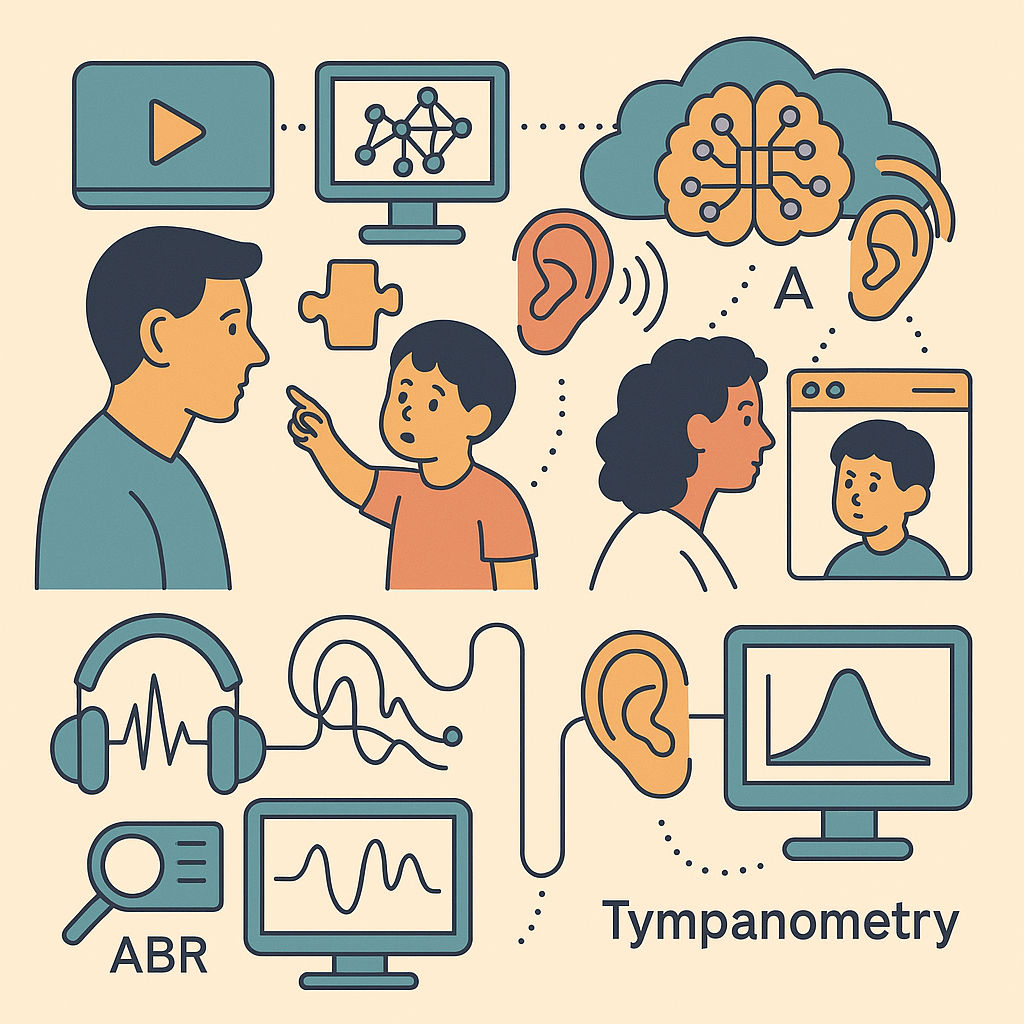
Autism or Hearing Loss? A Deep Scientific Exploration in a 3‑Year‑Old Child
Introduction
Imagine a three-year-old boy who rarely responds when his parents call his name and has only a few spoken words. His family and doctors are left wondering: is he showing early signs of autism, does he have a hearing problem, or both? This scenario is more common than one might think. In one real case, a toddler named “Tyler” was initially thought to be deaf due to his limited speech and lack of response to sounds . Specialists even diagnosed him with auditory dyssynchrony (a hearing nerve disorder). Yet further tests showed his physical hearing was normal . Years later, Tyler was found to have difficulty processing speech in noisy environments – a subtle auditory issue – and ultimately received an autism diagnosis at age 11 . His story highlights how autism spectrum disorder (ASD) and hearing impairments can intertwine, leading to diagnostic confusion .

For researchers and clinicians, such cases underscore the importance of a thorough, multidisciplinary approach. Many behaviors of autism can resemble those of a child with hearing loss. Both conditions may even co-occur more often than previously recognized – studies suggest hearing problems are about three times more common in autistic children than in the general population . Conversely, among children who are deaf or hard-of-hearing, an estimated 4–9% are also autistic (much higher than ~1% baseline prevalence) . In this article, we dive deep into the overlap between autistic behaviors and pediatric ear problems. We will compare their manifestations in a toddler, explain the science of how ears and the brain work together, review clinical tests used to distinguish the two, and discuss the latest knowledge on interventions. By understanding the nuances, researchers and practitioners can better ensure that children like our example get the right diagnosis and support at the right time.
Overlapping Behaviors: Autism vs. Hearing Issues in a Toddler
Certain behaviors in a young child can be “red flags” for autism, but they might also stem from hearing difficulties. This overlap can make initial identification challenging. Below, we examine key behaviors commonly seen in a 3-year-old and how they might be interpreted in the context of autism versus hearing impa
- Not Responding to Name or Instructions: Failing to respond when called is often one of the first concerns. In autism, this can result from social attention differences – the child may not intuitively understand that the name being called means them, or they may be so intensely focused on something else that they seem to tune out the voice. In fact, not responding to one’s name by 12 months is a well-recognized early sign of autism . However, hearing loss is a very common alternative explanation. A child with muffled hearing or deafness simply may not hear their name being called at normal volume. Professionals therefore stress that any child who does not respond to sounds or their name should have a hearing evaluation first . For example, one autism specialist recounts that her son would ignore his name but reacted immediately to certain favorite noises – such as a jingle from the TV – indicating his hearing was intact and the issue was cognitive . In contrast, a child with true hearing impairment wouldn’t respond even to loud or enticing sounds.
- Speech or Language Delays: Delayed speech development is another hallmark shared by both conditions. Many autistic toddlers have limited spoken language; some are nonverbal or use only a few words by age 2–3. Autism can affect the development of communication in complex ways beyond just speech (like affecting social use of language), but straightforward hearing problems will also hamper language learning. If a child cannot hear speech clearly during those critical early years, they will likely be slow to babble, form words, and understand language . Even a mild or partial hearing loss can significantly impact communication – any degree of hearing loss can delay language acquisition . Otitis media with effusion (fluid in the middle ear, a.k.a. “glue ear”) is a prime culprit here. It is extremely common in toddlers and often causes temporary hearing loss. In fact, up to 75–80% of children have at least one middle-ear fluid buildup by age 3–4 . During the fluid episodes, sounds become muffled (typically by around 20–30 decibels) . The child might appear disengaged or even autistic simply because they aren’t clearly hearing words to respond to. Crucially, once the hearing issue is treated (e.g. fluid drains or tubes are placed), these children often make rapid gains in speech. By contrast, an autistic child’s speech delay is not due to ear mechanics; rather it stems from differences in brain development affecting language processing. Those children usually need specialized therapy to develop communication, since improving hearing alone won’t “cure” the communication impairments of autism.
- Sensory Reactions to Sound: Unusual responses to sound are classic in autism. Some autistic children are hypersensitive to everyday noises – they might cover their ears or cry at sounds that others tolerate easily (like vacuum cleaners or crowded rooms). Others can be hyposensitive – seeming oblivious even to loud noises . In Leo Kanner’s foundational 1943 description of autism, he noted this paradox: one child “would not budge at sudden loud noises” (raising questions of deafness), yet another would panic at the sound of a vacuum . Modern research confirms these sensory extremes: an estimated 50–70% of autistic people have hypersensitivity to sound at some point , while a subset under-react to noises. How does this compare to hearing disorders? A child with an actual hearing loss is more likely to miss soft sounds (mimicking the autistic hypo-response) rather than to overreact. In fact, parents of children with undiagnosed hearing loss often suspect autism initially because the child might seem to “live in their own world” and not notice auditory stimuli. On the other hand, certain ear conditions can cause pain or distortion with loud input – for instance, an acute middle ear infection makes the eardrum tender, so a loud noise could be physically painful. There is also a condition called hyperacusis (sound intolerance) that can occur in some children, including those with auditory nerve disorders or after prolonged ear infections, where the tolerance for noise is low. But true hyperacusis in a toddler is relatively rare. Thus, if a young child is consistently over-reactive to sound (covering ears at normal noise levels), autism or a general sensory processing disorder is more likely to be the cause . If they under-react or ignore sounds, one must test for possible hearing loss – but autism could also be at play, as autistic neurology sometimes fails to prioritize spoken words over background noise.
- Social Engagement and Behavior: Autism is fundamentally a social-communication developmental condition. Early signs include limited eye contact, not sharing enjoyment (e.g. not pointing to show objects), and less reciprocal play. A hearing impairment can cause a child to appear socially detached as well, but for different reasons. A deaf or hard-of-hearing toddler may not follow verbal cues or may play alone simply because interactive communication is difficult without sound. However, if that child is visually attentive, they often still seek out others through eye contact, gestures, and facial expressions once they realize those avenues are available. In contrast, an autistic toddler might avoid eye contact and seem in their own world even when physically able to hear and see you . Another difference is in repetitive behaviors: autistic children frequently display repetitive motions or routines (lining up toys, hand-flapping, etc.), which are not explained by hearing loss. A child with hearing loss might babble differently or use repetitive banging of objects as communication or play, but they do not have the intrinsic need for sameness or self-stimulatory behaviors that autism can produce. Additionally, frustration behaviors can manifest in both groups – e.g. tantrums or hyperactivity. A child with unmanaged hearing loss may act out or have attention issues because they’re missing information and feeling lost; indeed, chronic glue ear has been associated with inattention and hyperactivity in toddlers . An autistic child might meltdown due to sensory overload or changes in routine. Context and combination of signs matter: for example, hearing loss alone would not cause a child to spin in circles repetitively or fixate on a narrow interest, whereas autism might. Conversely, autism alone would not cause a consistently abnormal hearing test or physical ear exam finding.
Comparative Summary: Behavior Clues
To summarize the above points, the following table highlights some key behaviors and how they can present in a toddler with autism vs. one with hearing difficulties:
| Behavior / Symptom | Possible Explanation in Autism | Possible Explanation in Hearing Issue |
| Does not respond to name or voices | May not understand social cue of name; attention absorbed elsewhere; or auditory hyposensitivity (appears to “tune out” speech) . | May not hear the call due to hearing loss (especially high-frequency consonants in name). Child might respond if looking at speaker’s gestures, but not to voice alone. |
| Delayed speech / limited words | Developmental language disorder related to ASD; may also have apraxia or atypical language use (echolalia, etc.). Often combines with poor social communication (e.g. limited gesturing) . | Reduced auditory input hinders language learning. Child cannot clearly hear words to imitate. Often babble is limited or distorted. Once amplification or fluid resolution occurs, speech may rapidly improve . |
| Covers ears or upset by sound | Sensory hypersensitivity – certain sounds are overwhelming or even physically distressing; common in ASD (e.g. vacuum, loud music triggers pain or fear) . The child’s hearing is typically normal, but the brain’s response is exaggerated. | Unusual unless sound is truly painfully loud. In acute otitis media, loud noises might hurt due to inflamed eardrum. Some children with partial hearing loss experience “recruitment” (where sounds jump from barely heard to uncomfortably loud). Generally, frequent ear-covering in everyday environments is not typical of mild/moderate hearing loss (more likely ASD or anxiety). |
| Appears inattentive or hyperactive | Could be due to autism-related attention differences or co-occurring ADHD (common in ASD). Child might also be disengaged from people because of difficulty processing social cues, leading to “in their own world” behaviors . | Could be a byproduct of missing auditory information. Child may seem to ignore others because they truly don’t hear them well. They might flit from activity to activity because language isn’t holding their attention. Studies link chronic ear fluid to shorter attention span and increased activity level . |
| Poor social interaction | Core feature of autism: reduced eye contact, not imitating others, lack of joint attention (not pointing to share). Prefers solitary play or repetitive activities over interactive play . May not respond to social smiles or games. | Primarily due to communication barrier. The child may want to engage but doesn’t catch verbal invitations or cues. They might seem shy or aloof until adults use visual/tactile ways to include them. Importantly, a hearing-impaired child usually does make eye contact and will engage socially when communication mode is adjusted (e.g. using signs, gestures or face-to-face play). |
Table: Key behaviors in a 3-year-old and how they might indicate autism vs. a hearing problem. Many signs – like not responding or speech delay – overlap, so clinicians must carefully assess the child’s hearing and developmental patterns to differentiate the causes.
As the table shows, context and combinations of behaviors are crucial in interpretation. If a child exhibits many social-communication differences (poor eye contact, lack of pointing, no pretend play) in addition to not responding to sound, autism becomes more likely – but even then, a hearing test is mandatory to rule out or confirm any concurrent hearing loss . Conversely, if the child’s main issue is language delay and inattentiveness but they are otherwise socially engaged when hearing, one might first suspect a hearing impairment. In practice, we must often investigate both possibilities. Indeed, experts emphasize performing audiological exams on every child with speech delays or autism red flags, because sometimes “hearing problems can indeed contribute to language delays” even in an autistic child . And in cases where both ASD and hearing loss co-exist, recognizing both early is vital so that intervention can target both needs.
The Science of Hearing: How the Ear and Brain Work Together
To understand the causes of these behaviors, we need to look at how normal hearing works – and how different ear problems disrupt that process. Hearing is a complex chain of events converting sound waves in the air into meaningful signals in the brain. Figure 1 illustrates the anatomy of the human ear and its key parts (outer, middle, and inner ear):
Figure 1: Anatomy of the human ear. The outer ear (green) captures sound waves and funnels them to the eardrum. The middle ear (red) bones transmit vibrations to the inner ear (purple), where the cochlea and auditory nerve convert them into electrical signals for the brain .
Outer ear: Sound waves enter the ear canal and strike the tympanic membrane (eardrum) . The outer ear’s job is simply to collect and direct sound; if it’s blocked (say by earwax or malformation), sounds will be reduced.
Middle ear: Behind the eardrum is an air-filled chamber containing three tiny linked bones (ossicles: malleus, incus, stapes). When the eardrum vibrates from sound, it moves these ossicles, which amplify and conduct the vibration to the oval window, a membrane leading into the inner ear . The middle ear is connected to the back of the throat via the Eustachian tube, which ventilates and equalizes pressure . If the Eustachian tube isn’t working (often due to colds or allergies in young children), pressure changes and fluid can build up in the middle ear – this is otitis media with effusion (OME) or “glue ear.” Fluid in the middle ear dampens the eardrum and ossicle movement, acting like a barrier to sound. As noted, OME is extremely common in toddlers and causes a conductive hearing loss (sound is partially blocked on its way into the inner ear). Typically, this causes a mild to moderate hearing reduction – one study reports an average loss of ~27 dB from OME , roughly equivalent to plugging your ears with your fingers. The child can hear, but muffled, as if under water. Importantly, OME often fluctuates: it might resolve spontaneously after a few weeks or months in many cases , but it tends to recur. About 30–40% of kids have repeated OME episodes, and 5–10% have fluid that persists over a year . During those periods, the child is at risk for speech and learning delays if the hearing loss is untreated . Chronic OME can even affect behavior – children may become hyperactive or inattentive because they aren’t receiving clear auditory input . The main way to relieve OME is by inserting tympanostomy tubes (grommets) in the eardrum to drain fluid and ventilate the middle ear. We will discuss treatments further in a later section.
Inner ear: The inner ear is where mechanical sound vibrations are transformed into neural signals. The stapes (last middle-ear bone) pushes on the oval window membrane, sending pressure waves into the fluid-filled cochlea – a snail-shaped organ in the inner ear . Inside the cochlea is the remarkable Organ of Corti, which houses rows of sensory hair cells along a basilar membrane . As fluid waves ripple through the cochlea, they bend these hair cells. When hair cells bend, they generate electrical impulses in the fibers of the auditory nerve (also known as the cochlear nerve) . This is the critical step of auditory transduction – converting a physical stimulus (sound) into a biological neural message. The auditory (VIIIth cranial) nerve then carries the signal into the brainstem and up to the auditory cortex in the brain, where the sound is interpreted (as speech, music, noise, etc.) .
Several things can go wrong in this delicate inner ear process. If the cochlea is damaged or malformed, the person has a sensorineural hearing loss – the inner ear cannot transduce sound properly. Causes in children include genetic conditions, congenital infections, or damage from certain medications, among others . Sensorineural hearing loss (SNHL) in a toddler might be suspected if newborn hearing screening was failed or if the child does not startle to loud sounds even when there’s no middle ear fluid. Another issue can occur after the cochlea – in the auditory nerve or brain pathways. For example, auditory neuropathy spectrum disorder (ANSD) is a condition where the outer hair cells of the cochlea might function (sometimes OAE test is even normal), but the firing of the auditory nerve is dys-synchronized. In Tyler’s case, “auditory dyssynchrony” was diagnosed, which is essentially ANSD . Children with auditory neuropathy may pass a cochlear test but still struggle to hear especially in noise, because the brain is not receiving a clear, timing-precise signal. This can present somewhat like a central processing issue – the child’s ears are “hearing” sound, but the brain isn’t reliably decoding it. Such kids can have fluctuating hearing ability: sometimes responding, other times not, which can definitely be mistaken for inattention or autism until properly tested.
Beyond these, there is also central auditory processing – how the brain interprets and makes sense of sound inputs. An autistic child might have perfectly normal ears and nerves, but still process sound differently in the brain. Research using EEG and fMRI indicates some autistic individuals have slower brain responses to certain sounds or difficulty filtering background noise . For instance, autistic infants have been found to sometimes have prolonged latencies in brainstem auditory responses, suggesting subtle differences in neural conduction . These are not hearing “loss” in the conventional sense (they can detect the sound, but their brain’s handling of it may differ). Such processing differences might contribute to why an autistic child can hear but not attend to speech, or why they might find certain pitches extremely irritating. Scientists are actively exploring these auditory processing aspects in autism . In some cases, children on the spectrum have co-occurring Auditory Processing Disorder (APD) – a condition where they pass a hearing test in quiet settings, but struggle to understand speech in noisy or echoey environments or to distinguish similar sounds. While APD is usually diagnosed in school-age children (when they can perform advanced listening tasks), its roots could be present earlier. Tyler’s difficulty in picking out speech from background noise is a good example . Such issues would not be detected by standard audiograms but can be measured with specialized tests and neural recordings.
In summary, hearing involves a relay from ear to brain: sound waves → eardrum → bones → cochlear fluid → hair cells → nerve impulses → brain decoding . If any link in this chain – outer ear, middle ear, inner ear, nerve, or brain – is disrupted, hearing “snafus” result . Conductive problems (outer/middle ear) muffle the sound; sensorineural problems (inner ear or nerve) distort or drop the sound; central problems (brain) may leave sound intact but not comprehended. Autism primarily affects the brain’s interpretation and integration of sensory inputs, which is why most autistic children have normal pure-tone hearing sensitivity but may still exhibit atypical responses to sound. However, as we have seen, autism and genuine hearing impairments can co-occur. It’s therefore essential to test and not assume one or the other without evidence.
Diagnostic Hearing Tests for Children with Developmental Delays
When a young child presents with signs that could be autism, hearing loss, or both, a comprehensive audiological evaluation is indispensable. Pediatric audiologists have a toolbox of tests designed for various ages and developmental levels. These tests fall into two categories: behavioral (requiring the child’s active response) and objective (measuring physiological responses without requiring cooperation) . Each has its role in evaluating a toddler who may not reliably report what they hear. Here are the main tests and how they work:
- Visual Reinforcement Audiometry (VRA) – Behavioral: For children around 6 months to 2.5 years developmental age, VRA is commonly used . The child sits on a parent’s lap in a sound booth. Sounds (tones or speech) are played through speakers to the side. When the child turns toward a sound source, they are “rewarded” by a brief visual treat – for example, a toy that lights up or an animated puppet. Over a short time, the child learns to look for the sound source whenever they hear something. By varying the volume and frequency of the sounds, the audiologist can estimate the child’s hearing thresholds for different pitches . VRA does not require the child to understand instructions; it leverages natural orienting reflexes and visual reward. Notably, VRA tends to work even for many children with autism, because it doesn’t demand social interaction – the task is simple and visually engaging . If a child has hearing loss, they will fail to turn at lower volume levels or not at all for certain pitches, giving a clue to the degree and pattern of loss.
- Conditioned Play Audiometry (CPA) – Behavioral: This is used for children roughly 2.5 years and up (preschool age) who can follow simple play instructions . Instead of just looking for a toy, the child is trained to perform an action whenever they hear a sound. For example, the audiologist might teach the toddler to drop a block in a bucket or put a ring on a peg each time a “beep” is heard . It becomes a game – “listen for the sound, then do the play task.” CPA requires a bit more cognitive ability and attention span than VRA, but it can yield more precise results if the child engages. By using either headphones or speakers, audiologists can test each ear separately with CPA and determine the quietest sounds the child can detect across frequencies . In a child with suspected autism, success with CPA depends on their interest in the game and ability to understand the cause-effect; some autistic 3-year-olds might do well, especially if the task is adapted to something they like. Others may find the test difficult due to attention or motivation issues – in those cases, objective tests (below) become crucial.
- Tympanometry – Objective: Tympanometry is a quick test of middle ear function, not hearing per se . A small probe is placed snugly in the ear canal, forming a seal. The machine changes the air pressure in the canal while playing a low tone, and measures how much sound bounces back versus passes through the eardrum. This reveals how well the eardrum and ossicles are moving. A normal tympanogram indicates the middle ear is air-filled and the eardrum is mobile. An abnormal (flat) tympanogram usually means fluid behind the eardrum (OME) or another middle ear issue, because the eardrum doesn’t move with pressure changes . Tympanometry is very useful for young kids because it’s fast and doesn’t require any response – the child just sits still for a second. If a toddler has a flat tympanometry result, one can immediately suspect that hearing may be dampened by fluid, even if the child’s cochlea is fine. In our context of autism evaluation: if tympanometry shows middle ear fluid, the child should be followed up for treatment (like antibiotics or an ENT consult for possible grommets), and hearing retested after fluid clearance. Sometimes this alone can make a big difference in a child’s responsiveness and language development. It’s important to note that tympanometry doesn’t tell how much hearing loss the fluid is causing (that still needs behavioral or other objective hearing tests), but it confirms the presence of a conductive issue .
- Otoacoustic Emissions (OAE) Test – Objective: OAE testing takes advantage of a fascinating phenomenon of the inner ear. When the cochlea’s outer hair cells are healthy, they actually emit very soft sound echoes in response to incoming sound. In an OAE test, a tiny earphone/probe is placed in the ear canal which plays a series of soft tones and records the echo responses from the cochlea . The test only takes a few minutes per ear if the child is quiet. Passing OAEs generally means the cochlea (particularly the outer hair cells) is functioning normally, and there is no more than a mild hearing loss . If a child has more than ~25–30 dB hearing loss, OAEs will typically be absent. Newborn hearing screenings around the world often use OAEs because they are quick and do not require any cooperation other than the baby being still. For our 3-year-old scenario, OAEs can be very informative: if a child with suspected autism passes an OAE test, it indicates that the inner ear is likely normal – so any hearing issues might be due to middle ear fluid (which wouldn’t necessarily block all OAEs) or due to neural/processing issues. If OAEs are absent, it suggests a possible sensorineural hearing loss. However, one must be careful – sometimes an active toddler won’t sit quietly enough, or fluid in the ear can also reduce OAE amplitude. In practice, audiologists often use OAEs in combination with tympanometry and the next test (ABR) as needed. The Autism Speaks ATN audiologist notes: if OAEs are absent or borderline, they would proceed to an ABR for full diagnosis .
- Auditory Brainstem Response (ABR) – Objective: ABR (also known as Brainstem Evoked Response Audiometry, BERA) is a powerful test that can determine if sound is getting through the ear and along the auditory nerve to the brainstem. In an ABR test, the child wears earphones or inserts that play click sounds or tone bursts, and electrodes (small stickers) are placed on the forehead and near the ears to record the brain’s electrical activity in response . The test measures the timing of electrical “waves” generated by the auditory nerve and brainstem nuclei after each sound. By averaging these signals, an audiologist can see if distinct waves (I through V) are present at expected times for a given sound intensity. Essentially, it’s a hearing test without requiring any conscious response. ABR can even estimate the hearing threshold: the sound level is lowered progressively to find the softest level that still yields a reliable brain response . ABR is typically used when behavioral tests are inconclusive or not possible – for instance, with a non-verbal or developmentally delayed child who can’t do play audiometry. The challenge is that ABR requires the child to be very still and quiet – movement or muscle activity interferes with the recordings. For infants under ~6 months, ABR is often done in natural sleep (after feeding the baby and letting them drift off) . But a 3-year-old will almost never sleep soundly enough on their own for 20+ minutes of testing. Therefore, ABR at this age usually requires sedation . Sedated ABR is a procedure where a mild sedative or anesthesia is given so the child can sleep through the test while monitored. Understandably, doctors do not take this step lightly – sedation has risks and costs – so they often try behavioral methods first . However, if autism is suspected and the child simply will not cooperate with other hearing tests, an ABR may be crucial to definitively rule out hearing loss. In fact, guidelines emphasize that in any child with significant speech delay, if you cannot get reliable behavioral hearing results, you should proceed to an objective test like ABR, rather than assume hearing is fine. Most of the time, the ABR will confirm normal hearing in these kids . But occasionally, it will uncover an undiagnosed hearing impairment contributing to the child’s challenges. As the audiologist Susan Eichert put it, “most of the children we test will have normal hearing results. However, it’s critical for us to answer whether some degree of hearing impairment is contributing to a child’s speech and language delays” . Once that is answered, the family and team can proceed with appropriate interventions.
In practice, a pediatric audiology exam for a 3-year-old with developmental concerns might combine several of these tools. For example: start with otoscopy (looking in the ears) and tympanometry to check middle ear status; do OAE screening to check cochlear function; attempt VRA or play audiometry to observe behavioral responses; and if results are inconclusive or suggest possible loss, arrange for a sedated ABR to confirm the hearing levels. This battery covers the entire auditory pathway from ear canal to brainstem. By contrast, if one only did a quick office screening (like a clap behind the child’s head), one might easily miss a mild hearing loss or misjudge the child’s responsiveness. This is why referral to a pediatric audiologist is so important in cases of suspected autism or speech delay . They have the expertise and equipment to get valid results even with very young or non-verbal children.
When Autism and Hearing Loss Overlap
It is challenging enough to diagnose and manage autism or hearing loss separately – but what about when a child has both? As research accumulates, we are realizing that dual diagnosis is not exceedingly rare. Moreover, even a mild hearing deficit can exacerbate the social and language difficulties of autism, and vice versa, autism can mask or complicate the recognition of hearing loss . Here we explore the intersection of these conditions:
Prevalence of Dual Conditions: Earlier, we cited that hearing problems (including chronic otitis media or partial hearing loss) are about 3× more common in children on the autism spectrum than in neurotypical children . One large 2016 study even found that roughly half of autistic children had at least one type of peripheral hearing anomaly, compared to 15% of typical peers . These anomalies were sometimes subtle – for example, unusual one-ear sensitivities or abnormal muscle reflexes in the middle ear . The reasons for this increased co-occurrence aren’t fully clear. Some risk factors affect both hearing and neurodevelopment: for instance, babies born prematurely or those who had certain infections in utero (like cytomegalovirus or rubella) have higher rates of both hearing loss and autism . It’s hypothesized that early insults to the developing brain or inner ear can lead to a combination of auditory and neurological effects. There is also the possibility of genetic links – a few syndromes (such as Waardenburg syndrome, FRAXA (Fragile X), or USH1C (Usher syndrome types), to name examples) can involve both hearing impairment and autism traits, though these are relatively uncommon individually. For the majority of cases, the overlap likely results from coincidental convergence of common conditions (autism occurs in ~1–2% of kids; hearing loss in ~1–3% of kids, and otitis media in a huge percentage) plus the contributory effects they have on each other’s manifestation.
Diagnostic Challenges: When a child has both autism and hearing loss, diagnosis can be delayed. Clinicians sometimes perform a “diagnostic ping-pong,” focusing on one and overlooking the other. An autistic child’s social unresponsiveness might be blamed entirely on hearing loss if a moderate loss is present – causing the autism to go undiagnosed for years. Conversely, a deaf child’s communication delays might be misattributed solely to autism by evaluators, when in fact better hearing access (through hearing aids or implants) could significantly help their social development. Jackson Roush, an audiologist, noted hearing from colleagues: “There’s this deaf child who seems to have characteristics of autism, but nobody’s evaluating that,” and conversely: “This child seems autistic, but maybe it’s related to hearing loss” . The takeaway is that professionals must keep an open mind that both conditions could exist. Standard autism assessments have to be adapted for children with significant hearing loss (using more visual stimuli, sign language where appropriate, etc.), and hearing tests must be done for all autistic children even if they appear to react to some sounds. Unfortunately, if one condition is missed, the child can miss out on critical early interventions. For example, a deaf autistic child might not get early behavioral therapy for autism if everyone assumes their issues are “just because they can’t hear” – losing time in building social-learning skills . Or an autistic child with glue ear might struggle extra hard and not progress in speech therapy simply because the auditory input is inconsistent – but if nobody checks the ears, this goes unnoticed. Children with both ASD and hearing impairment need a coordinated approach: addressing hearing with technology/medical treatment, and addressing autism with educational and therapeutic strategies. The good news is that awareness is growing. Researchers are developing tailored diagnostic tools for this overlap (for instance, autism diagnostic tests that don’t rely on responses to sounds or spoken language) . Early identification of autism in deaf children is shown to help families plan better support (like using total communication or sign language with additional visual supports for structure) .
Auditory Processing in Autism: Even without overt hearing loss, many autistic individuals have what we might call auditory processing difficulties. This is an active area of research. For instance, one study found autistic infants had prolonged auditory brainstem response latencies, indicating slower neural conduction in early auditory pathways . Other work using MRI and EEG has shown that autistic brains may have trouble filtering out background noise – essentially, the “signal-to-noise” processing is different. This aligns with reports from many high-functioning autistic people who describe, for example, being unable to focus on a teacher’s voice in a classroom because every other minor sound is equally invading their perception. In Tyler’s case, tests showed his brain struggled to discriminate words when there was competing noise . This kind of central auditory issue can compound language learning difficulties. It’s also possible that some repetitive behaviors in autism (like humming or seeking certain sounds) could be an attempt to self-regulate an auditory processing system that feels either starved or overwhelmed by certain inputs . From a neuroscience standpoint, overlapping characteristics hint that autism might fundamentally include differences in sensory neural circuitry, with hearing being just one domain affected in many individuals . Thus, some researchers have posited that screening auditory responses (like ABR) in infancy might even help flag children at risk for autism, although that’s not yet a proven clinical tool.
In summary, the overlap of autism and hearing issues means we must always consider the whole child. A child who doesn’t respond or speak may be autistic, or deaf, or both. If both, they face a “double challenge” in accessing language and social cues . The imperative for professionals is to ensure neither diagnosis is missed, and to appreciate that interventions need to be layered – for hearing, for communication, and for social development.
Intervention and Treatment Approaches
Whether a child has autism, a hearing problem, or both, early intervention is key to improving outcomes. The specific therapies or treatments will differ based on the cause of the behaviors. Here we outline strategies for each scenario and the scientific rationale behind them:
- Treating Ear Problems: The approach depends on the type of hearing issue:
- Otitis Media with Effusion (Glue Ear): Initial management might be watchful waiting, since many cases resolve spontaneously within 3 months . If fluid persists and causes significant hearing loss (typically >3 months with >20 dB loss) or if it’s recurrent and affecting development, insertion of grommets (tiny ventilation tubes) in the eardrums is often recommended . Guidelines generally say that if a child has had persistent effusion for over 3 months and hearing loss, tubes should be offered, and even sooner if there is already speech/language delay or other developmental risk . Grommets allow air into the middle ear and fluid to drain, instantly improving hearing in most cases. It’s a minor surgery done under brief general anesthesia. Many parents report their child’s responsiveness and babbling improve dramatically after tubes, as the “muffled ear” issue is relieved. Alongside tubes, doctors often remove enlarged adenoids if they contribute to Eustachian tube blockage . On the downside, grommets can have complications (perforation, scarring, infections in ~20%+ of cases) , but these are usually manageable and weighed against the developmental benefits of normal hearing during crucial language years.
- Permanent Hearing Loss (Sensorineural): If a child is diagnosed with a sensorineural hearing loss (e.g. congenital deafness or partial loss), the main interventions are hearing technology and therapy. For mild to moderate losses, hearing aids are typically fitted – these devices amplify sounds to make them audible to the child. For severe to profound deafness, cochlear implants may be indicated (often by 1 year of age or 1½, as early as possible) . A cochlear implant bypasses damaged hair cells by electrically stimulating the auditory nerve directly. Post-surgery and device activation, the child will require extensive auditory rehabilitation therapy to learn to interpret the new signals. In parallel, families might use sign language or other visual communication strategies, especially if the hearing devices don’t fully restore clear hearing. The science behind early amplification is that there are “sensitive periods” in brain development for language – the auditory pathways and language centers develop rapidly in the first 3 years, so providing access to sound during this window greatly improves the chances of strong speech and language outcomes . Indeed, research shows children who receive appropriate hearing intervention by 6 months of age have significantly better language skills than those diagnosed later . Therefore, newborn screening and early audiology follow-up have been a game-changer for deaf and hard-of-hearing children.
- Auditory Neuropathy / Auditory Processing issues: For conditions like auditory neuropathy spectrum (where the inner ear may be fine but nerve firing is irregular), hearing aids sometimes help by amplifying sound enough to trigger more consistent nerve responses, but often these children benefit from signal processing and educational strategies. They may do well with FM systems (wireless mics that send the teacher’s voice directly to their ear device, improving signal-to-noise ratio) once they reach school. Some with severe issues might also qualify for cochlear implants, which can in certain cases help synchronize neural responses. Auditory Processing Disorder (APD) in an older child (usually diagnosed ~7 or older) is often managed with techniques to improve listening skills and environmental modifications – e.g., auditory training exercises, sitting closer to the teacher, using captions, etc. While APD is not “curable” per se, the child’s brain can improve its processing with therapy and as they mature. It’s also worth noting speech/language therapy can assist these kids in developing compensatory strategies (like using context to fill in missed words).
- Sound Sensitivity (Hyperacusis): If a child – autistic or not – has extreme sound sensitivity, therapists might employ a desensitization approach. This could involve occupational therapy with a sensory integration focus, introducing tolerable levels of sound and building up tolerance, or simply allowing the child to use tools like noise-cancelling headphones in overwhelming environments and slowly encouraging them to participate in noisy settings for increasing durations. There are also programs (some controversial) like sound therapies or filtered music therapies aimed at “retuning” auditory processing; evidence for those is limited, but some families report improvements anecdotally. For cases related to anxiety, behavioral techniques to manage the panic reaction to noise (like gradual exposure with positive reinforcement) are often effective.
- Autism-Focused Interventions: Autism is a pervasive developmental condition, so its treatment is multi-faceted. The core areas to address are communication, social interaction, and behaviors (including sensory needs). Key approaches include:
- Behavioral Therapy: One well-known method is Applied Behavior Analysis (ABA), which uses positive reinforcement to teach skills in a structured way. For toddlers, Early Intensive Behavioral Intervention (EIBI) programs can significantly improve IQ, language and adaptive skills over a couple of years of therapy (20-40 hours per week in some models). Newer naturalistic approaches, like the Early Start Denver Model (ESDM) or pivotal response training, integrate behavioral techniques in play and daily routines. The evidence shows that starting intervention by around age 2–3 yields better outcomes in terms of language and social skills than later starts . Essentially, the young brain is more plastic, and autism symptoms can be mitigated more effectively earlier on.
- Speech-Language Therapy: Given that many autistic children have speech delays or differences, working with a speech-language pathologist is crucial. For a minimally verbal child, therapy might focus initially on non-verbal communication – like using Picture Exchange Communication System (PECS) or simple sign language or gesture imitation – to give the child a way to express needs. Often, once a child sees the functional power of communication, verbal language begins to develop. For children who do speak, therapy can work on improving sentence structure, pragmatic (social) language use, and clarity. In our context, if a child has both autism and hearing loss, the speech therapist must be aware of the hearing constraints (for example, using visual cues and checking the child’s hearing devices).
- Occupational Therapy (OT) and Sensory Integration: OT can help autistic children with sensory processing issues, including auditory sensitivities. They might design activities to help the child better tolerate certain sensations or to self-regulate (e.g. using a swing or deep pressure for calming). They can also address fine motor delays and self-care skills which sometimes accompany autism.
- Social Skills and Play Therapy: Teaching an autistic toddler how to play with others, how to imitate, and how to engage in back-and-forth interactions is a big part of early intervention. Techniques include floor-time play therapy (following the child’s lead and then expanding on it to encourage interaction) and structured peer playgroups when they get a bit older.
- Educational Supports: If the child is in a preschool program, specialized instructional strategies (visual schedules, extra repetition, predictable routines) help them thrive. Many autistic children are visual learners, so using pictures or written words can support understanding (this can help deaf children too, of course).
- Parental Training and Involvement: Research emphasizes that coaching parents in strategies to facilitate communication and handle behaviors is very effective. Parents can learn to create communication opportunities, reinforce positive behaviors, and use techniques like joint attention interventions (which encourage the child to share focus on objects and people). This is especially important in the age 0-3 range when much of the child’s time is at home.
- Managing Co-existing Conditions: Autism often comes with other challenges – e.g. ADHD symptoms, anxiety, sleep disturbances. Addressing these (sometimes through behavioral strategies, other times with medical management) can vastly improve a child’s ability to benefit from therapies. For instance, if a child has severe anxiety at the sound of a fire alarm, working on that fear or using protective ear muffs at fire drills can reduce trauma and allow them to participate in school without meltdowns.
It’s important to stress that there is no single “cure” for autism, but these interventions can significantly improve skills and quality of life. Many autistic children, especially those who receive early and appropriate intervention, make big strides in communication and learning. Some may eventually talk, read, and function academically at or near typical levels, while others might always need a high level of support – autism is a spectrum. The goal of therapy is to help each child reach their fullest potential and to equip them with ways to communicate and engage with the world. For a researcher or clinician, one key area of current investigation is how to tailor interventions for those children who are both deaf/hard-of-hearing and autistic. Traditional autism therapies assume the child can hear spoken prompts; thus, there’s work being done on adapting ABA or social training into sign language or visual-only modalities for deaf autistic kids . Similarly, ensuring children with hearing loss have full access to language (spoken or sign) as early as possible is critical, as it forms the foundation for later social and cognitive development .
Finally, an overlapping consideration is family support. Parents of children with autism, hearing loss, or both, often experience stress and need guidance. Early intervention programs usually include family services – counseling, support groups, and education so that the family can navigate the journey. Empowering parents with knowledge (for example, how to maintain hearing aids, or how to implement a visual schedule at home) makes therapies far more effective. From a public health perspective, raising awareness that a child who doesn’t respond or speak should get both hearing checked and an autism screening can lead to earlier identification and referral, which numerous studies have shown leads to better outcomes in both domains .
Key Notes :
Distinguishing autistic behavior from hearing impairment in a young child is a nuanced process – much like detective work that spans multiple disciplines. We have seen that the same outward symptom (a toddler ignoring his name, or not speaking) can spring from very different root causes. The case of Tyler and many others teaches us that we must “test, not guess.” Careful audiological testing is not optional – it is a foundational step whenever a communication delay or autism is suspected . Likewise, developmental assessments should be considered for children with hearing loss who show any atypical behaviors, to ensure that autism or other conditions are not overlooked .
From a scientific standpoint, research into this intersection is illuminating how hearing and brain development are interwoven. Early auditory input (or lack thereof) shapes the brain’s language networks, while neurodevelopmental conditions like autism influence how those auditory signals are processed. There is increasing evidence that subtle hearing issues can amplify autism’s challenges – for example, a mild hearing deficit might further delay an autistic child’s speech or make social engagement even harder, compounding developmental risks . The encouraging flip side is that addressing even one side of the equation (say, treating a chronic ear infection or fitting hearing aids) can sometimes yield notable improvements in an autistic child’s responsiveness and learning. Similarly, using autism-informed strategies (like visual supports or routines) can greatly benefit deaf children on the spectrum in acquiring communication.
For researchers, the convergence of ASD and auditory research opens new avenues: could early auditory brainstem responses serve as biomarkers for autism risk? Can therapies be designed that simultaneously target sensory processing and language acquisition? Ongoing studies – such as those decoding how autistic brains perceive sound – promise to deepen our understanding of sensory neuroscience in autism . On the clinical front, interdisciplinary collaboration is key. Audiologists, developmental pediatricians, speech-language pathologists, and occupational therapists must work together. A child does not come with labels – they simply present with behaviors and traits. It is up to the team to peel back the layers and craft a holistic support plan.
Important KEY :
Why Hearing Tests Belong Before an Autism Evaluation
Many toddlers referred for autism spectrum disorder (ASD) actually have an auditory processing issue—most commonly Auditory Neuropathy Spectrum Disorder (ANSD)—that mimics core ASD red flags. Without objective audiological testing, a child with ANSD can be mischaracterized as “socially unengaged” or “autism‐like,” delaying the hearing interventions that often unlock speech and engagement (pubmed.ncbi.nlm.nih.gov).
Overlapping Early Signs of ANSD and Autism
- Severe speech delay
A 3-year-old with ANSD may remain nonverbal or use only a handful of words—just like many children with ASD. - Inconsistent sound responses
“Good day/bad day” hearing: reacts to TV or music at normal volume but ignores loud speech at close range. - Heavy reliance on visual cues
Constant lip–reading or watching faces to compensate for scrambled auditory input. - Sensory behaviors
Covers ears at distorted loud sounds yet seeks out softer, rhythmic noises.
These behaviors arise in ANSD because the auditory nerve fires out of sync—not because of a primary social‐communication disorder (en.wikipedia.org).
The Three-Step Audiological Work-Up
Before any autism assessment in a nonverbal or variably responsive child, follow this objective protocol:
- Tympanometry
- Confirms normal middle-ear function (Type A tympanogram) so you know sound reaches the cochlea unimpeded.
- Otoacoustic Emissions (OAE)
- Checks outer-hair-cell function by measuring tiny echoes the cochlea returns when soft clicks or tones are played. In ANSD, OAEs are typically present despite listening difficulties.
- Auditory Brainstem Response (ABR/BERA)
- Records the brainstem’s electrical response to click or tone-burst stimuli via scalp electrodes. Absent or severely abnormal waveforms (especially Wave V) with normal OAEs confirm ANSD by pinpointing neural dys-synchrony (en.wikipedia.org).
Only once you’ve ruled out conductive and cochlear causes can an ABR reliably detect a nerve-to-brainstem timing issue.
A Case of Near Misdiagnosis
In one published case, an 18-month-old repeatedly “passed” basic screenings yet showed spotty hearing and poor speech milestones. Multiple experts insisted he was not deaf, and some even suspected developmental disorders. It was only after a comprehensive ABR—which revealed absent brainstem waves alongside normal OAEs—that he was diagnosed with ANSD. Appropriate hearing interventions followed, and the earlier suspicions of autism were withdrawn (longdom.org).
Very Important :
Before “ruling in” autism for any nonverbal or inconsistently responsive toddler, ensure you’ve “ruled out” neural hearing disorders with tympanometry → OAE → ABR/BERA. This sequence prevents treatable auditory issues from masquerading as ASD, allowing timely hearing support and often dramatically improved speech and social engagement (pubmed.ncbi.nlm.nih.gov).
Examples How Ai Can help
🧠 1.
Screening & Diagnosis Support
a.
Video analysis of social behaviors
- Deep learning models trained on video can detect:
- Lack of pointing
- Absence of eye contact
- Atypical gestures or facial expressions
- Projects like AutismAI or MIT’s AI for Autism use pose estimation and temporal modeling (like LSTM or 3D CNNs) to spot autism-like behaviors from home videos—even earlier than pediatricians.
b.
Automated audio screening
- AI can detect speech delay, missing consonant-vowel patterns, or abnormal intonation using voice recognition + spectrogram analysis.
- Deep neural networks can flag auditory neuropathy (ANSD) vs. typical ASD by analyzing voice features (e.g., response latency to name, pitch variability).
🦻 2.
Hearing and Brain Response Analysis
a.
ABR waveform classification
- Deep learning models (like CNNs or transformer-based architectures) are used to automatically analyze ABR/BERA waveforms and detect:
- Absent wave I or V (common in ANSD)
- Subtle delays
- Noise contamination
- Improves early detection and avoids human interpretation error
b.
Tympanometry pattern recognition
- AI trained on tympanogram shapes (Type A/B/C) can detect middle-ear effusion or Eustachian tube dysfunction—often before symptoms are severe.
🧩 3.
Differentiating Autism from Hearing Loss
- AI systems that combine multi-modal data (video, audio, EEG/ABR, parent questionnaires) can learn to differentiate ASD from ANSD or OME.
- For example, a child with no pointing and no eye contact:
- If ABR is abnormal + OAE is normal → AI could classify as likely auditory neuropathy
- If ABR and OAE are normal but joint attention is absent → likely ASD
This could help prevent misdiagnosis and personalize referrals to ENT vs. autism specialists.
👂 4.
Real-world Examples
- Cognoa’s Autism Diagnosis Tool (FDA-cleared) uses AI + clinician input to diagnose autism faster and with high sensitivity.
- Neural audiology startups are building platforms to classify hearing-loss types (cochlear vs. neural) using ABR and EEG inputs.
- Parent-facing apps are being developed to guide families through symptom tracking and direct them to the right specialists using AI triage models.
Sources:
- Eichert, S. (Audiologist). Autism Speaks – “Can hearing problems contribute to autism-related language delays?”
- Lang-Roth, R. GMS Curr Top Otorhinolaryngol Head Neck Surg. (2014) – “Hearing impairment and language delay in infants”
- Madhusoodanan, J. Spectrum News – The Transmitter (2020) – “Confusion at the crossroads of autism and hearing loss”
- Sarris, M. SPARK for Autism (2023) – “Noise sensitivity in autism”
- National Autistic Society (UK) – Signs of autism in children
- Autism Speaks Autism Treatment Network – Audiology recommendations
- Additional References: Pediatric audiology guidelines (CDC, NIH), Early intervention research on ASD (PMC studies) , and clinical expertise from multidisciplinary teams. (All linked and cited inline above)